
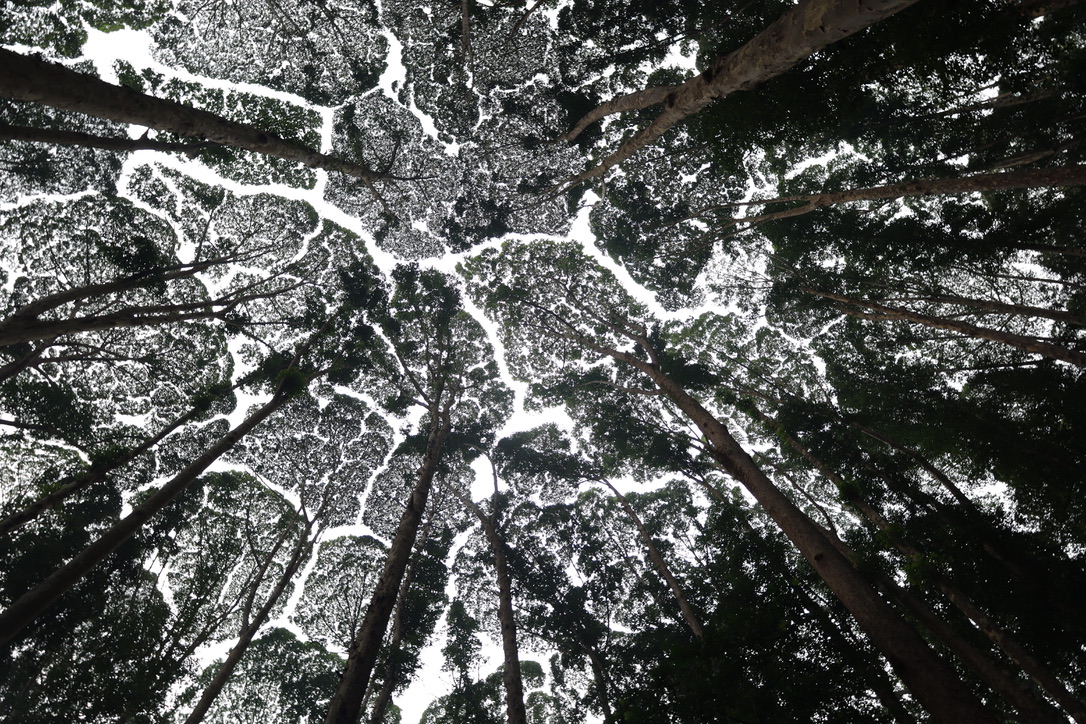
FRIM is one of those places that deserves more attention than it gets. It rarely comes up in the usual Kuala Lumpur itinerary, although anyone who enjoys rainforest walks could easily find a reason to spend a morning here. For us, that reason was crown shyness, the pattern of narrow gaps between neighboring treetops that you may have seen in photographs without realizing it was taken in Kepong.
We came to see those trees, but there was much more to the visit than the view overhead. The forest has a history of mining, planting experiments, wartime disruption, and restoration that is difficult to imagine when you’re standing among such tall trunks. Add the old buildings and a surprisingly interesting museum, and there’s plenty here to talk about long after you’ve put the camera away.
Before making the trip, though, there’s an important booking detail to get right. The crown shyness stop is within FRIM’s main campus and requires an advance reservation with a nature guide. A visit to Kepong Botanic Gardens or a ticket for the Forest Skywalk won’t take you there, so arrange the guided trek first and build the rest of your day around it.
A century in the making
Looking at FRIM today, it’s hard to picture the ground as it was before the forest grew back. Parts of the area had been stripped for tin mining and vegetable farming, leaving researchers with the task of establishing trees on land that had already been heavily disturbed. That was what made the project so ambitious: the difficult conditions were part of the experiment.
The site was approved in 1925, and experimental planting began the following year under forest research officer F. W. Foxworthy. Trials covered about 100 native and introduced species, while the main building, occupied in 1929, brought laboratories, a library, a herbarium, and a museum into the developing grounds. The institution would later become autonomous and take the name Forest Research Institute Malaysia in 1985, but its planting history reaches a full century in 2026.
The early researchers wanted to find out which trees could establish themselves successfully on difficult ground, knowing that many attempts might fail. Some of the experimental stands went on to become part of the landscape visitors see today; a study of FRIM’s kapur plantations, for instance, examined stands planted in the 1930s. The forest walk takes you through the results of work that needed decades to develop.
That history was recognized internationally in 2025, when FRIM Forest Park Selangor entered the UNESCO World Heritage List as a cultural landscape. The designation includes the relationship between the restored forest and its research buildings, roads, and other features. It makes sense when you see them together, with the institution still surrounded by the forest it helped establish.
Arranging the crown shyness walk
To reserve the right activity, email frim_enquiry@frim.gov.my and ask for a guided nature trek that includes crown shyness. If you’re planning a weekend visit, aim to book a month in advance so you have time to confirm your preferred date and arrange transportation. Include your preferred date and time, the number of visitors, and a contact number, along with the ages of any children or details of anyone who may have difficulty with steps and uneven ground.
Parking is included in the reservation. If you’re visiting from overseas, arrange your transportation early and provide the license plate number of your taxi, tour vehicle, or Grab car when making the reservation so vehicle access to the campus can be arranged. Use the same email to ask for the full cost, payment instructions, meeting point, and arrangements if the weather affects the walk. If you’d also like to visit the Research Gallery, mention it here so the team can advise on access and timing. A short message is enough:
Subject: Crown shyness guided nature trek inquiry
Hello FRIM Visitor Information Centre,
I would like to book a guided nature trek to see crown shyness on [date], preferably at [time].
There will be [number] visitors in our group, including [details of any children].
Could you please confirm availability, the total cost, payment arrangements, and where we should meet the guide?
My contact number is [number].
Our transportation will be [taxi, tour vehicle, Grab car, or private car], with license plate number [number]. Please arrange vehicle access to the campus.
Thank you.
Wait for the team to confirm your slot before making the trip, since an inquiry alone does not secure a reservation.
If you need to follow up, contact the Visitor Information Centre at 03 6279 7592, 03 6279 7597, or 03 6279 7649 during office hours, Monday through Friday from 8 a.m. to 5 p.m. Allow time for a reply, particularly when planning a weekend visit.
What the visit costs
FRIM lists the nature guide at RM150 for a group of up to 10 visitors, with parking included in the reservation. Confirm the applicable visitor admission charges with the booking team. For a couple sharing the guide, that is RM75 each; split among five people it becomes RM30 each, or RM15 each with a full group of 10. These are calculations for sharing within your own group, rather than advertised individual tour tickets.
Published adult admission is RM1 for Malaysian citizens and RM5 for visitors who are not Malaysian citizens. Ask the booking team to confirm the complete amount and how visitor admission is included in your booking; parking is already covered by the reservation.
The guided walk takes approximately two hours. Although FRIM lists trekking hours from 8 a.m. to 5 p.m. daily, your starting time needs to be agreed upon as part of the reservation. Leave room around the walk for arrival arrangements and any additional stops you have booked.
Finding your meeting point
For international visitors, transportation needs to be arranged before submitting the vehicle details for the reservation. Provide the license plate number of the taxi, tour vehicle, or Grab car that will enter the campus, and if the assigned vehicle changes, contact the booking team to update the details before arrival.
FRIM’s main campus is in Kepong, Selangor, but the name alone isn’t enough to tell a driver where your walk begins. Use the entrance and meeting instructions in your booking confirmation, and request a location pin if anything is unclear. Share the confirmed meeting point with your driver, since a search for the botanic gardens or Forest Skywalk could send you to a different part of the grounds.
Give yourself time to deal with entry, parking, and finding your guide before the scheduled start. With the arrangements settled, you can spend the walk paying attention to the forest instead of wondering whether you’ve arrived at the right place.
Among the trees
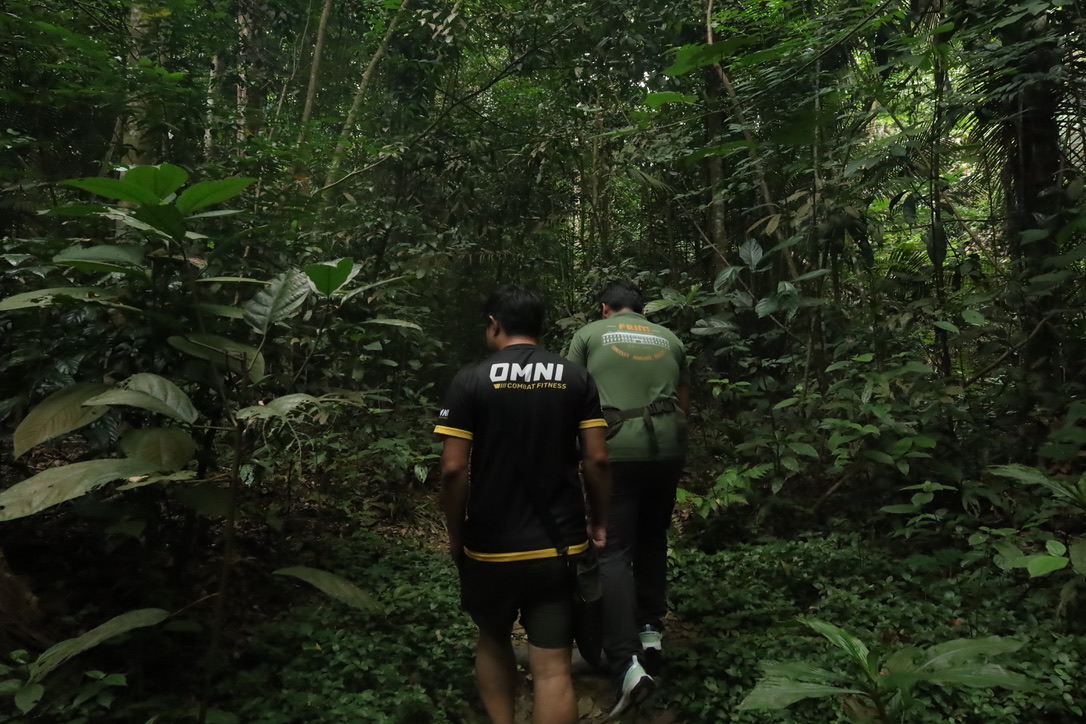
FRIM gave me a bit of a US national park feeling, with its huge old trees, quiet forest roads, and older buildings surrounded by greenery. There was history all around us, and learning how the grounds had developed made those buildings as interesting to me as the forest beside them. I had arrived thinking mainly about crown shyness, but the setting itself became part of what I liked about the visit.
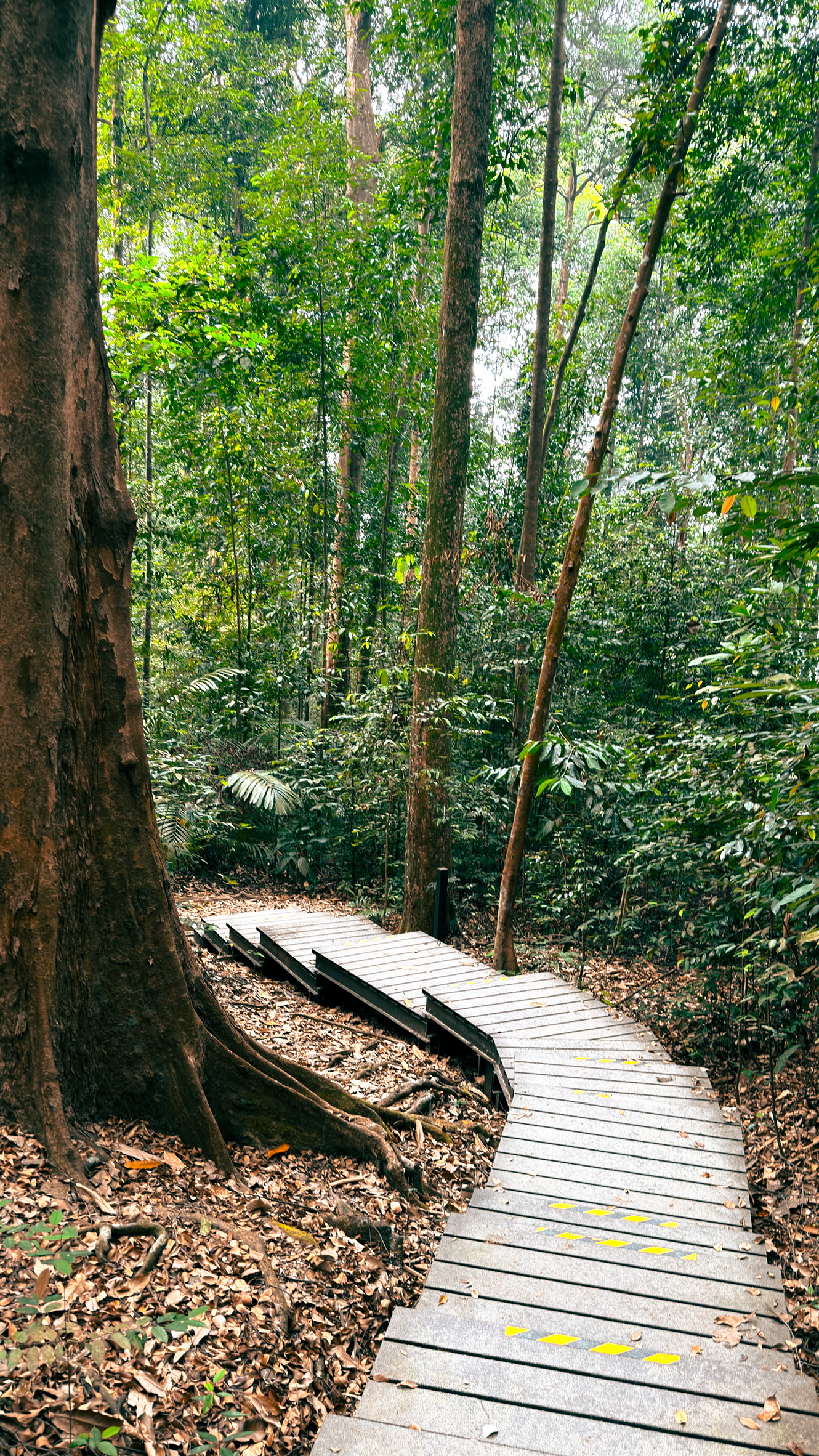
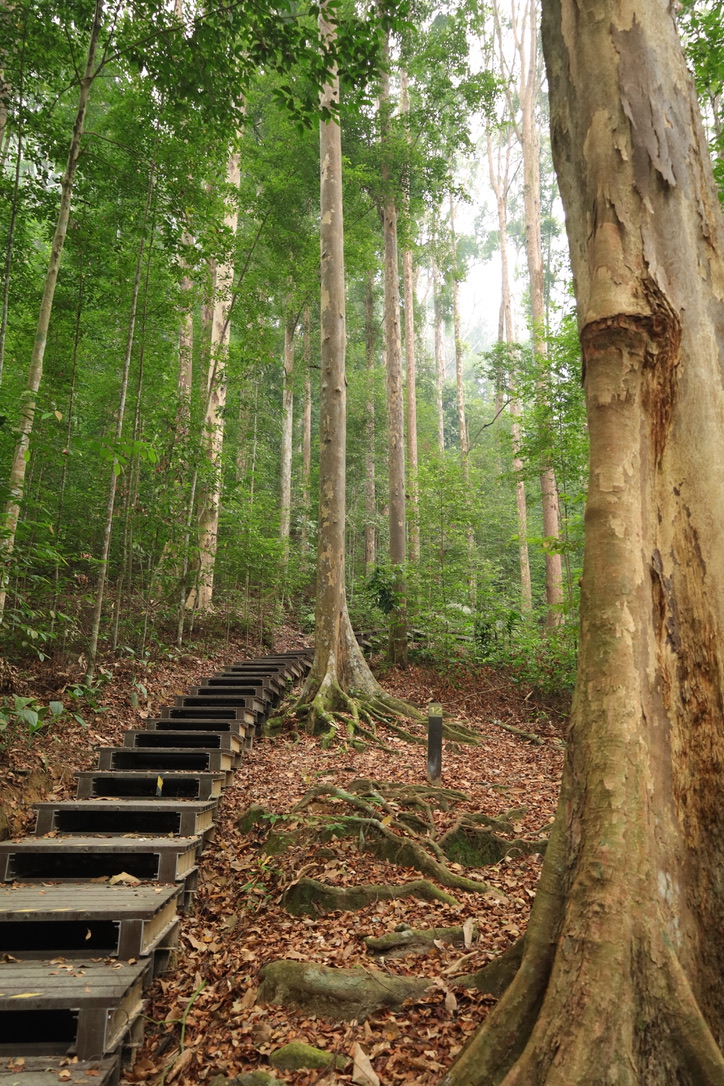
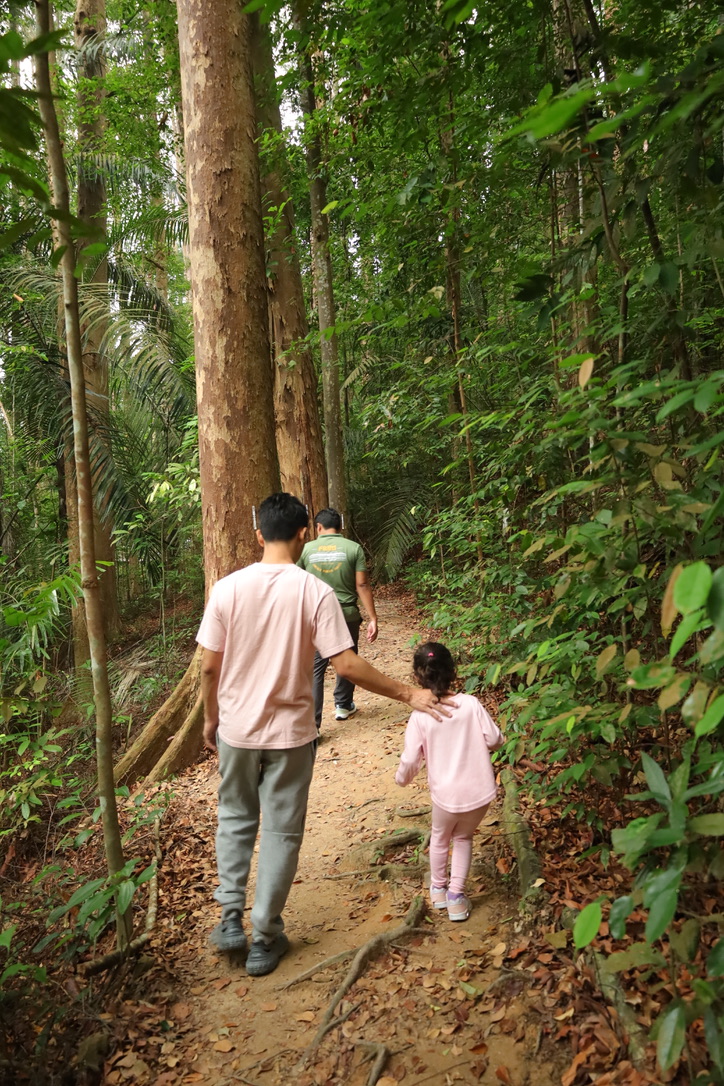
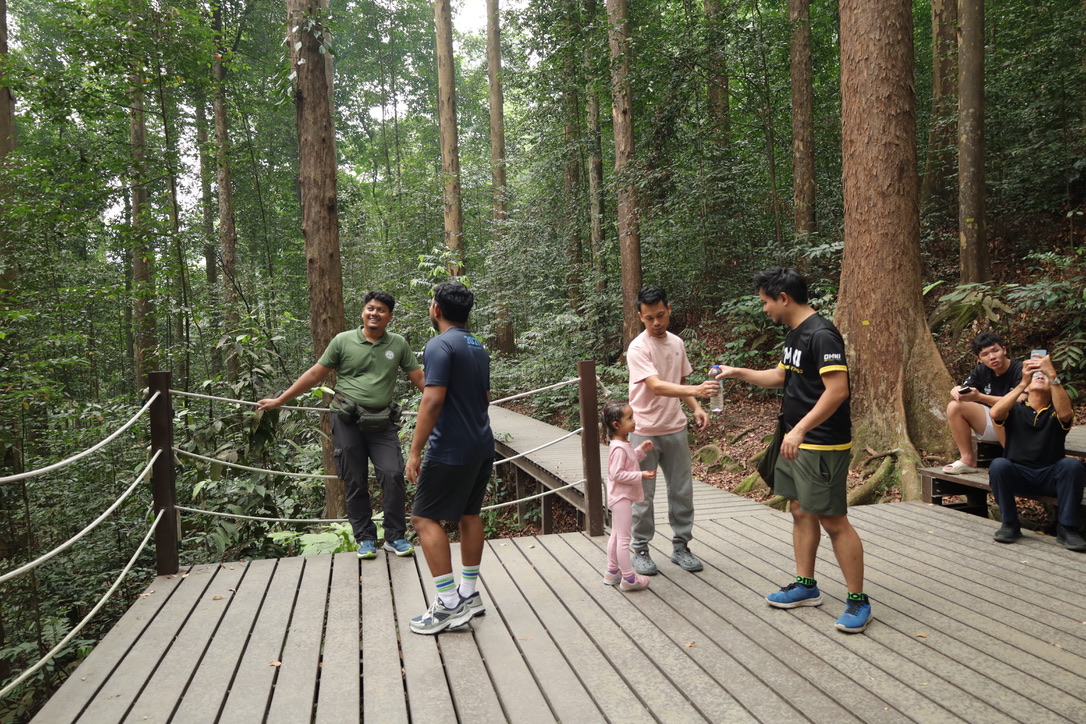
On the trail, the scenery is closer around you. Tall trunks stand beside the path, vegetation fills the spaces between them, and roots spread across ground covered in fallen leaves. Our route included dirt paths, wooden walkways, and flights of steps, with narrower stretches where we followed one another in single file. The photographs give a better sense of the terrain than the word “walk” alone might suggest.
FRIM describes the nature trails as easy and gently rolling, although that still means watching your footing and being comfortable outdoors in the heat and humidity. A guide is also useful for making sense of what surrounds you, whether you want to know the name of a tree, why it was planted there, or how it fits into the wider forest.
Bringing children along
We had a child in our group, and there were places where an adult’s helping hand was useful, particularly around exposed roots and the narrower parts of the path. Families considering the walk should think about the terrain as well as the length of the visit: a child who is happy on a paved garden path may find stairs and uneven ground more tiring.
Tell the booking team your child’s age and ask about the planned route rather than assuming every walk follows exactly the same course. Water, comfortable shoes, and a bag light enough to carry while helping a child are sensible preparations.
The trees behind the photograph
The kapur trees associated with FRIM’s familiar crown shyness view are identified as Dryobalanops aromatica, a member of the dipterocarp family found in Sumatra, Peninsular Malaysia, and Borneo. They can reach around 60 meters in height, with straight trunks and large supporting roots that give you some sense of their scale before you look up.
Their rounded crowns brought to mind the trees people call pokok brokoli around the Rawang Bypass. Kapur is recorded near Rawang, although “broccoli trees” is a description of their appearance rather than a species name, and the wider forest contains other trees as well. At FRIM, the view from underneath lets you see a different part of that shape: the outlines of neighboring crowns, separated by thin strips of sky.
There is more to kapur than its appearance. The name aromatica refers to the fragrant resin, while the tree has a history as a source of camphor and timber for heavy construction. Knowing this gives the stop a connection to the region beyond the photograph, bringing together the tree’s place in the forest and its value to people.
Why do the crowns leave those gaps?
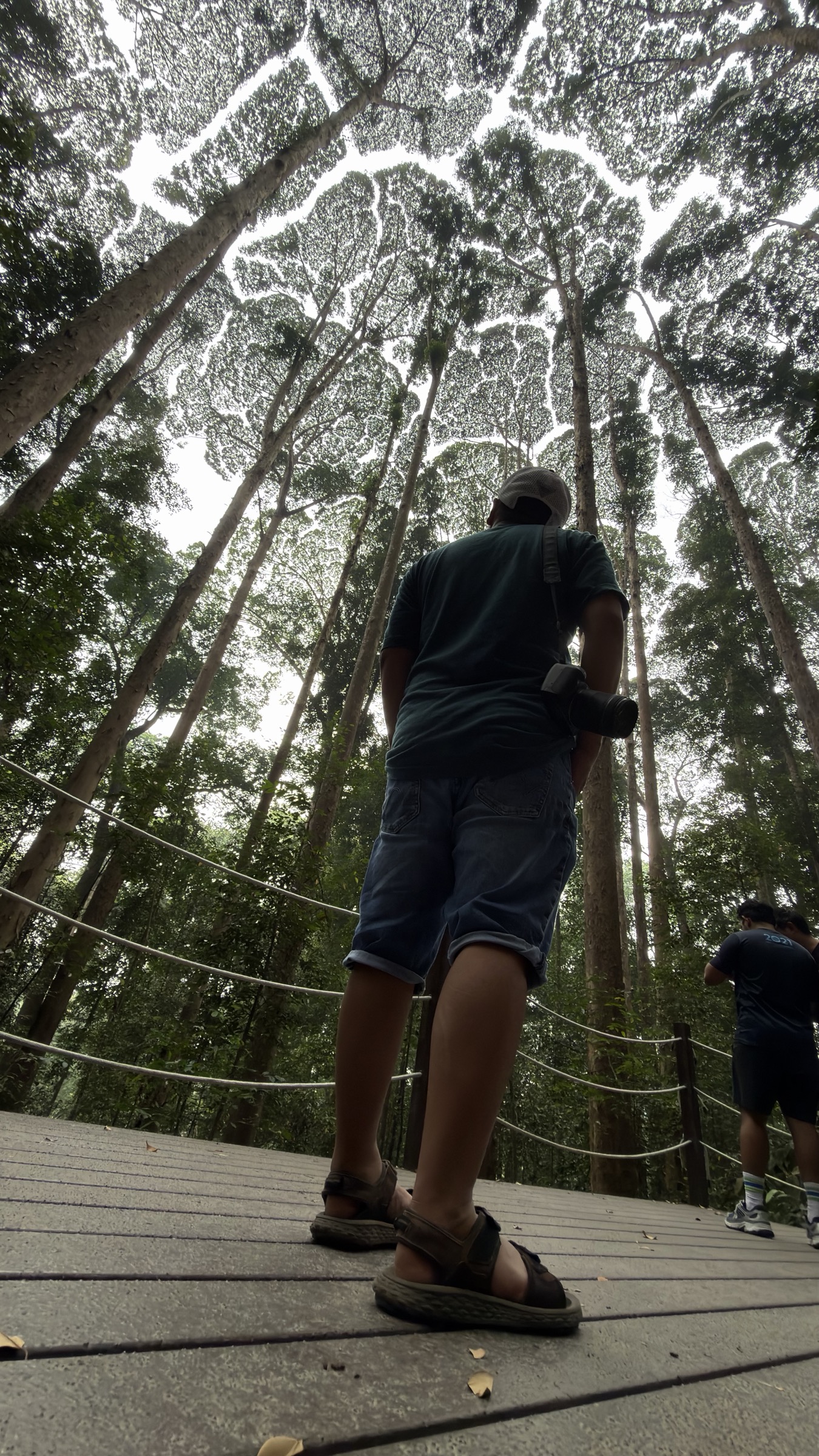
From below, the canopy looks like a giant jigsaw puzzle, with foliage fitting closely together while narrow gaps reveal the sky between the crowns. The pattern is clear enough in a photograph, but the process behind it is more difficult to explain, partly because a still image cannot show what happens when the trees move in the wind.
One explanation is that neighboring branches rub or knock against one another as they sway, damaging buds and small twigs at their outer edges. Over time, that contact can restrict growth into the space between crowns. Researchers studying black mangroves in Costa Rica found damaged twigs near those edges and a relationship between branch movement and the width of the gaps, lending support to the idea that wind and abrasion help shape the canopy.
Light and shading have also been proposed as influences on crown growth. A later study in a temperate mixed forest found stronger support for abrasion in that setting, but evidence from one type of forest doesn’t automatically explain what happens among kapur trees in Malaysia. The relative importance of these processes may vary with the species and conditions, which is why there is more to the subject than one neat explanation.
You may also hear that the gaps could make it harder for insects or disease to move between trees. That is a possible consequence of separated crowns, rather than an established explanation for why the pattern forms here. Scientists have evidence for several processes affecting crown development, but there are still questions about how they work together in different forests.
Looking up from the forest floor
Crown shyness occurs beyond FRIM and among trees other than kapur, although it can be difficult to see when lower vegetation blocks the view. A clearer opening beneath the canopy makes the spaces much easier to follow, which helps explain why the right viewing spot matters as much as the trees themselves.
Our photographs show the platform where we stood and the canopy above it. From that position, you can trace the outlines of the crowns without needing to climb onto an elevated walkway. A wide angle camera setting helps fit more of the pattern into the frame, but it’s worth putting the phone down for a moment to appreciate how far above you the branches actually are.
A museum that deserves some of your time
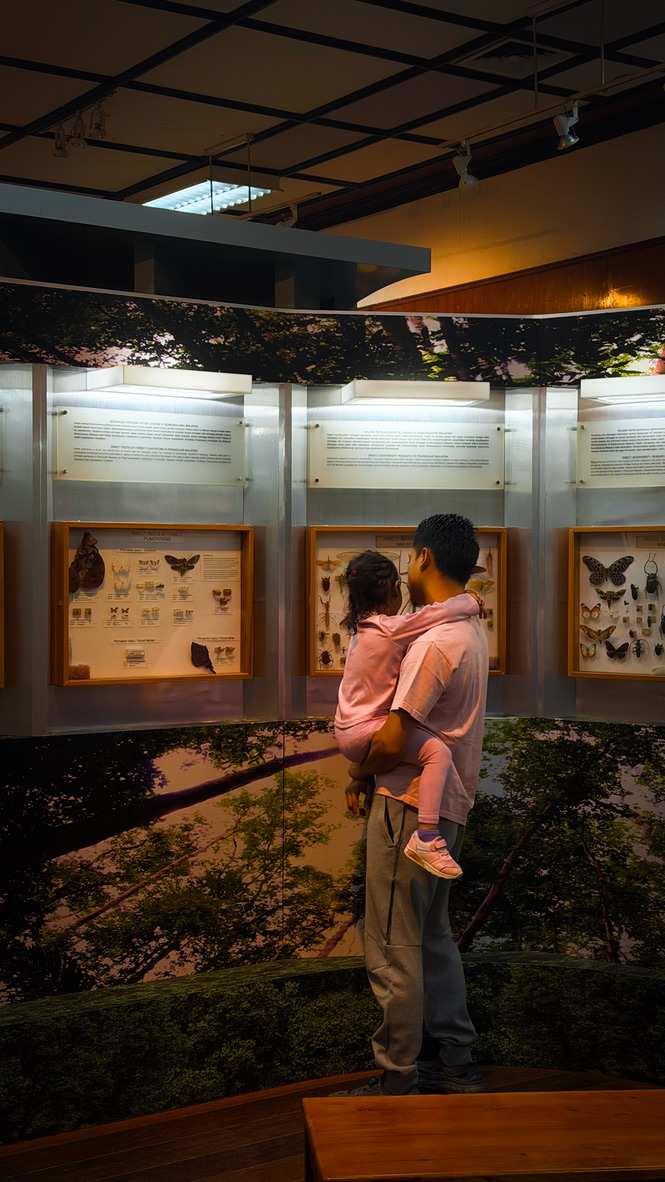
The museum was more interesting than I had expected, with displays on Malaysian timber, wood identification, insects, and forest ecosystems that added to what we had seen outdoors. FRIM calls it the Research Gallery, and its collections of specimens, samples, models, and research displays offer a way into subjects that could otherwise feel quite specialized.
Wood identification is a good example. Most of us would begin with the color or general appearance of a piece of timber, yet those features can change and may not reliably distinguish one wood from another. The arrangement of cells visible on the end surface provides more useful clues, according to FRIM’s identification reference. It’s the kind of detail that makes familiar materials worth examining more closely, whether they end up in a building, a piece of furniture, or a museum display.
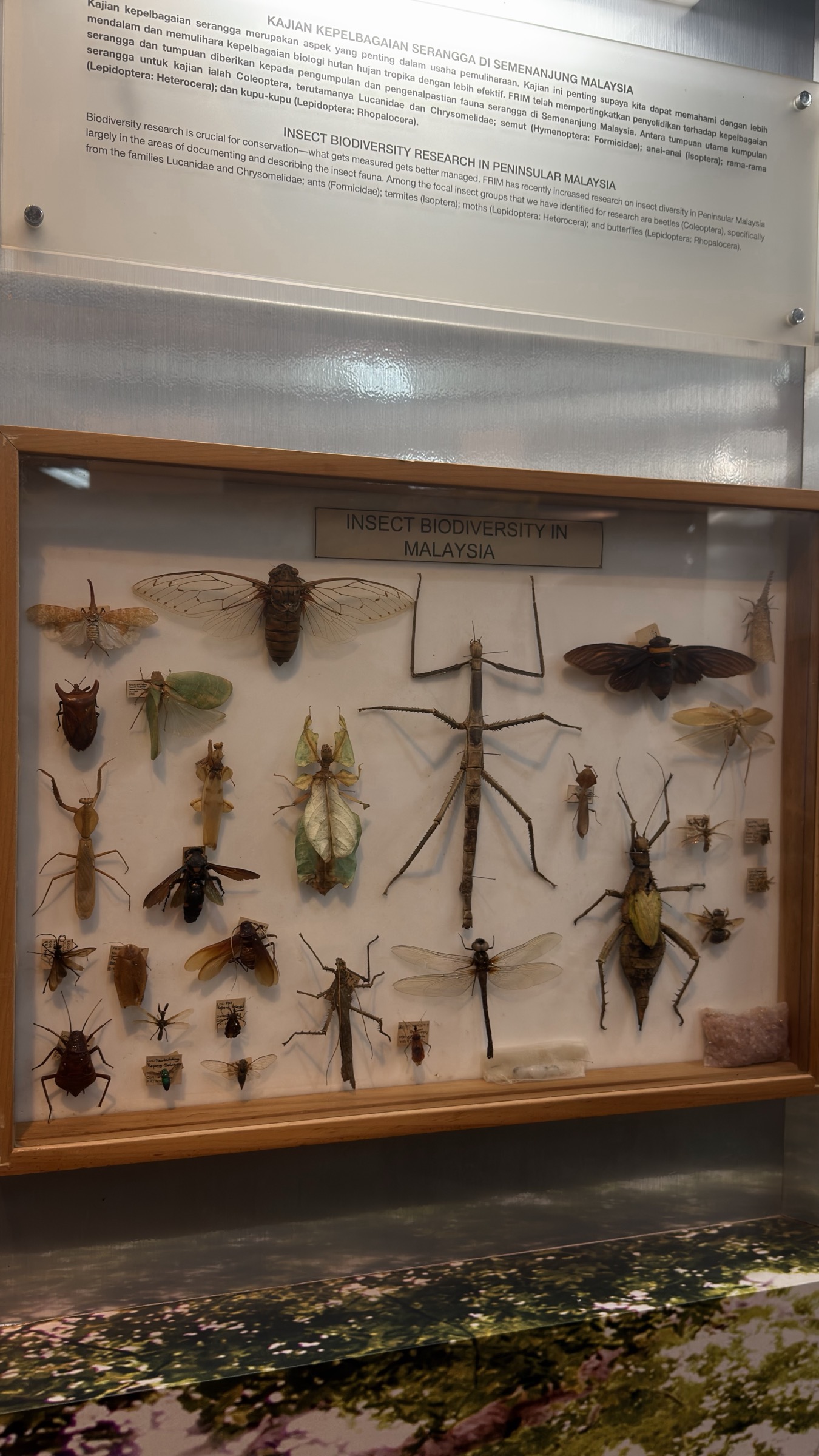
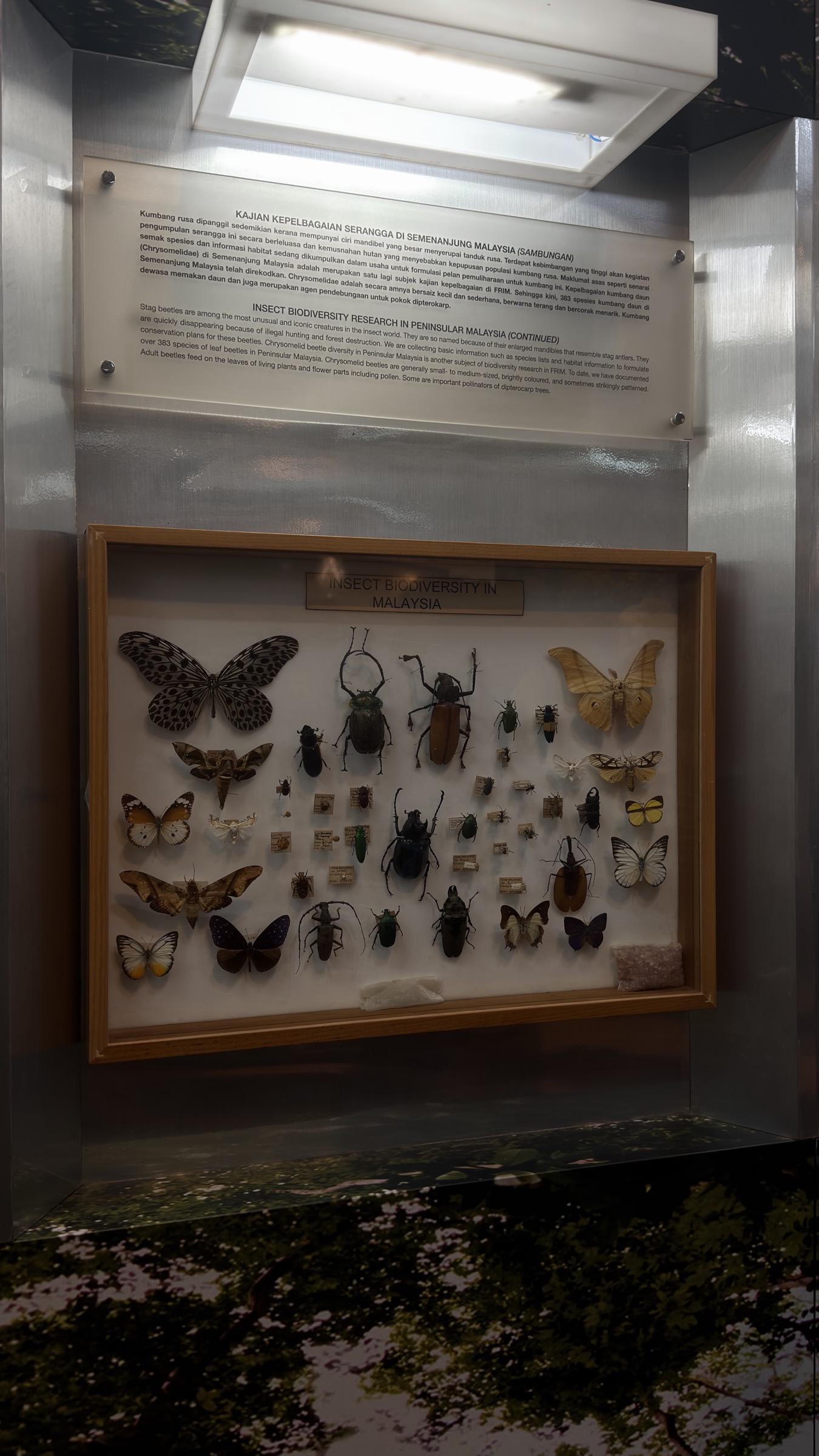
The insect cases held our attention too. Beetles, butterflies, moths, and stick insects could be examined together, with their different sizes and forms much easier to appreciate than they would be during a passing encounter on the trail. Our photos capture some of those displays, as well as a quieter part of the visit spent looking at the specimens with a child.
The gallery was part of our day, but access and arrangements may differ between visits. Ask to include it when reserving the trek so you have time for both the forest and the exhibits.
The Japanese occupation and its place in the forest
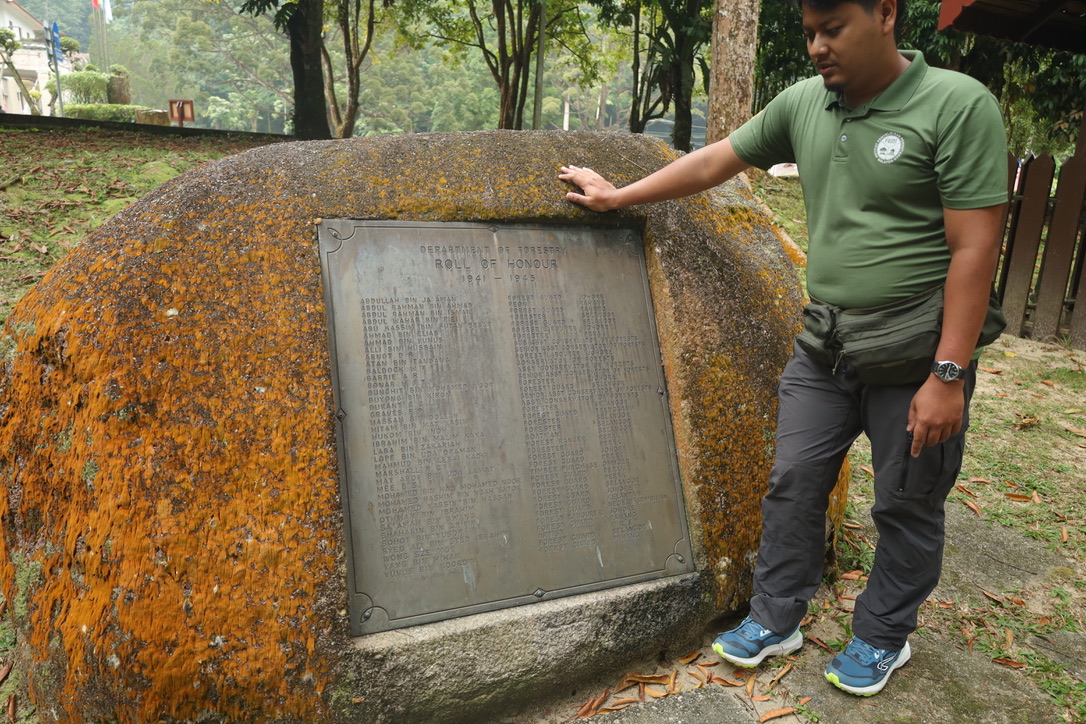
The Department of Forestry’s Roll of Honour memorial adds a more somber part of the history to a walk through the grounds. Installed in 1954, it records the names of 38 Forest Department staff who lost their lives during World War II. We stopped beside it during our visit, a reminder that the institute’s history continued through years of upheaval as well as scientific progress.
During the Japanese occupation, the institute was known as Ringyo Shikenjyo, or the Forestry Experimental Station, and some planting took place even in those years. The World Heritage nomination records a stand of Cinnamomum camphora at the end of the Coniferetum and another tree beside the Office Pond near a small ornamental bridge. These camphor trees were a different species from the Dryobalanops aromatica kapur trees associated with crown shyness.
The record also describes damage and looting, while local staff remained on duty and their families helped safeguard the grounds. Japanese authorities visited from Kuala Lumpur, and research units disrupted by the war were revived afterward. It is a history of both interruption and care, with the survival of the site owing much to the community that stayed there.
Seen in that context, the trees and old buildings carry a more personal history than a planting date can convey. The memorial belongs to the same landscape as the research plots, preserving the names of people whose lives were part of the institution’s wider story.
A few things to bring
Comfortable shoes with a good grip are more useful here than anything elaborate, along with clothing you don’t mind sweating in. Bring drinking water, insect repellent, and a small towel, and consider a light rain jacket and a waterproof pouch for your phone if rain is forecast. Keeping your bag light will make the steps and uneven sections more comfortable.
Before leaving, check your confirmation and any messages from FRIM about weather or changes to the arrangements. Once the guided trek is confirmed, you can fit other activities around it without confusing the crown shyness visit with the separate botanic garden and Skywalk attractions.
What stayed with us
We came for crown shyness and left appreciating FRIM for much more. The canopy was the attraction that drew us in, but the forest’s beginnings, the wartime plantings, and the museum gave the visit a depth I hadn’t expected. Those huge trees were impressive on their own; learning how the landscape developed made them more memorable.
If you enjoy forests and have room in your Kuala Lumpur plans, allow time for the guided walk and ask about the gallery when you book. There is a century of planting, research, and restoration behind the view, and a visit gives you the chance to understand some of it while standing among the trees.
Booking details and published prices checked on October 25, 2026. Confirm current arrangements with FRIM when reserving.
All photographs supplied by the author.



The conversation
Questions, tips & experiences.
Have a question about this guide, or a useful travel tip? Every comment is reviewed before it appears.
0 comments
Be the first to share a question or a helpful tip.