
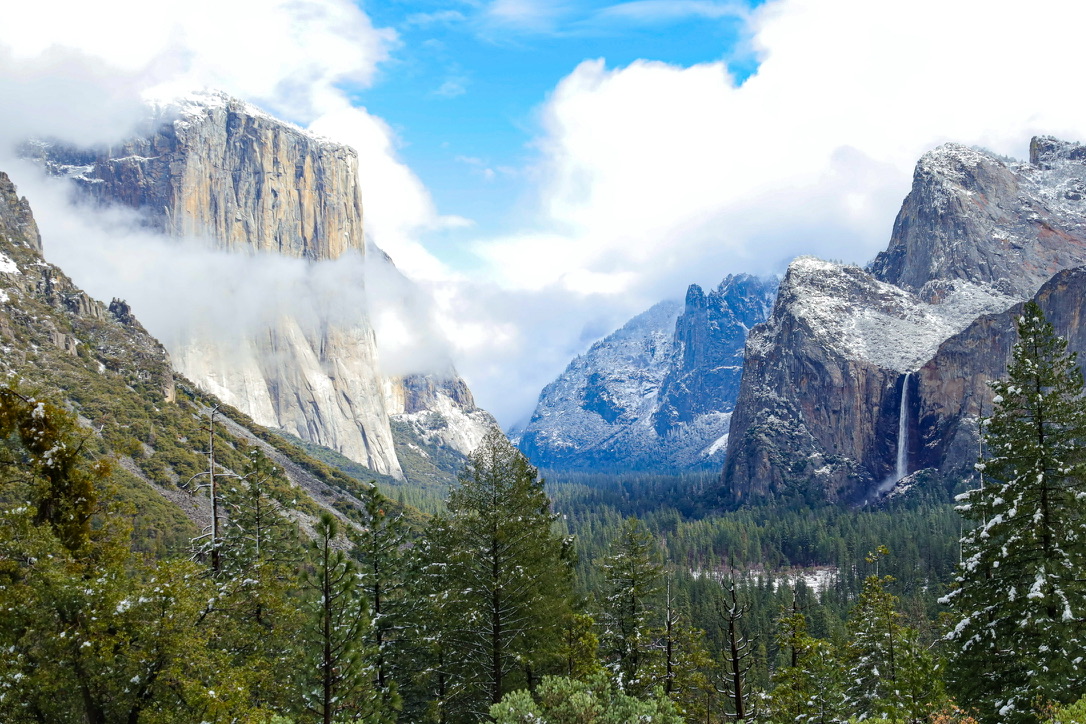
I think the visa interview is one of the main reasons Malaysians leave the United States off their travel list. Before even looking at destinations, the application already sounds like a hassle: fill in a form, pay a fee and go to the embassy in Kuala Lumpur.
But look at what that initial effort gives you. Malaysian B1/B2 visas are listed as multiple entry with a ten-year validity. Once you have a valid visa, you do not need to repeat the application and embassy interview for every vacation. One application can open up years of travel. The validity granted is shown on the visa issued to you. 1
I have a B1/B2 visa myself, although I have not used it yet. Most of my time in the United States was on a J-1 exchange visitor visa and an L-1 visa. Those are quite different from B1/B2, with more complicated application processes.
For B1/B2, I find the process quite straightforward. There are steps to complete, but I believe that if you follow this guide, you will find it easy to work through them. The interview should not be the reason to dismiss a US vacation.
Let’s go through it step by step, from filling in DS-160 to paying the fee, booking the appointment, attending the interview and waiting for the result.
In this guide
1. Which visa do Malaysians need?
Malaysia is not currently a Visa Waiver Program country. A Malaysian passport alone does not qualify you to use ESTA for a US vacation. 16 B-2 covers tourism and visits; B-1 covers permitted short business activities, such as meetings and conferences. A combined B1/B2 visa covers both categories, subject to their rules. It does not authorize employment in the United States. 2
For this walkthrough, I am using an ordinary vacation as the example. Choose the category that matches your real purpose. If your trip involves paid work, a formal course of study or another specialized activity, establish the correct category before completing the tourist application.
2. One application, years of travel
The ten-year validity is the part I want more Malaysian travelers to consider. You could use the same valid visa for a first vacation and return for another trip years later. You do not need to fit everything into one visit or apply again each time you want to go.
The length of each stay is determined separately when you enter the US. Check the authorized departure date on your I-94 after arrival. 12
3. Income, commitments at home and a genuine vacation
I see the interview as a chance to explain something that should already be clear when we travel: we can afford the trip, we have a life and commitments at home, and we intend to return after our vacation.
A regular income helps explain how you are funding your travels. Your work, business, family and other commitments in Malaysia help explain why you will return. Prepare to talk about what you do, where you are going, how long you will be away and who is paying. These are relevant parts of a visitor visa assessment. 10
To me, this expectation is reasonable. Even when Malaysians travel to a country that does not require a visa, we should be ready to explain our plans, show that we can support ourselves and leave when the visit ends. Visa-free travel still comes with responsibilities.
I also see these checks as part of the wider effort to prevent overstaying, illegal work and exploitation, including human trafficking. For someone planning a genuine vacation, the practical preparation is to explain the trip and their circumstances clearly.
4. Why I find the US more affordable than Central Europe
Cost is another reason I think more Malaysians should consider the US. In my experience, traveling there can be cheaper than traveling in Central Europe. The exchange rate, hotel costs and transportation are part of that comparison for me.
That is why I would not write off a US vacation simply because it is a long-haul destination with a visa application. Once the visa is sorted, there is an entire country to explore, and the cost can be more manageable than people expect.
The first step is getting the application done. Here is the process.
5. The application, step by step
- 1. Prepare your passport, background details, travel outline and photo.
- 2. Complete and submit a separate DS-160 for each traveler.
- 3. Save and print each DS-160 confirmation page.
- 4. Enter the official Malaysia appointment service through the embassy’s visa page.
- 5. Create your profile, select the appropriate category and enter the matching DS-160 number.
- 6. Pay through JomPAY and allow 1–2 business days for payment confirmation.
- 7. Use the number supplied in the payment confirmation to book the interview, and confirm passport return arrangements.
- 8. Prepare your documents and attend the embassy appointment.
- 9. Follow the outcome instructions, track the case and collect the passport.
- 10. Check the visa before committing to final travel arrangements.
Apply early. The official wait-time table is a planning reference, while the appointment calendar shows bookable slots. Neither predicts the time an individual case may need after interview. 13
6. Application fees: what to budget
| Item | What to know |
|---|---|
| DS-160 submission | The government form itself has no separate submission charge. |
| B visa application processing fee | RM888 per applicant. The application fee is nonrefundable. Follow the payment instructions in the official Malaysia portal. |
| Other expenses | Photo, printing, optional passport delivery, travel to KL and accommodation if needed. Optional service charges depend on your selection. |
Use the payment reference and instructions generated for your application in the official Malaysia portal. Keep the payment record.
7. Prepare this before opening DS-160
I would make one private reference sheet with the following information. It saves repeatedly stopping to find an employer’s address or an old travel date.
- Your current passport and previous passports if relevant.
- MyKad details, home and mailing addresses, phone numbers and email addresses.
- Other names used and relevant nationality or residence history.
- Your proposed US dates, duration, first accommodation address and who will pay.
- Names and relationships of travel companions.
- Previous US visits, visas and any refusal or immigration history.
- Parents’ details and spouse’s details if applicable.
- Current and previous employment, education and travel history for the periods requested on screen.
- Social-media identifiers for the platforms and period requested; use account handles, not passwords.
- A compliant digital photo, plus a print if required.
Use a computer with a stable connection. The CEAC start page currently supports Chrome, Edge and Firefox and estimates about 90 minutes. Save frequently: an inactive session can time out after 20 minutes. 3
8. DS-160, section by section

Complete answers in English using English characters, except for the native-alphabet name field. Use “Does Not Apply” only when appropriate; it is not a substitute for information that applies to you. 4
The entries below explain how I would organize the information. Field labels can change, and extra questions appear for some applicants. Examples are hypothetical, not recommended answers to copy.
8.1 Start the application and keep the retrieval details
- 1. Open the official CEAC DS-160 page.
- 2. Select Malaysia, Kuala Lumpur as the application location if that is where you will apply.
- 3. Enter the displayed security code and start a new application.
- 4. Record the Application ID and your security-question answer privately.
- 5. Use the form’s save function before moving away from a section. To continue later, use Retrieve an Application.
I would keep those details in a secure note rather than rely on a browser tab staying open. An unfinished application is different from a submitted confirmation.
8.2 Personal information: names need care
Use passport identity details. Malaysian naming conventions do not always map neatly onto American surname and given-name boxes. Do not automatically turn a father’s name into a family surname or remove “bin” or “binti” to make the screen look familiar.
The official DS-160 help says that where a passport has only one name, it goes in Surname; if there is no first or given name, use FNU in Given Names. That does not mean every Malaysian should use FNU. If your passport’s name structure is unclear, obtain embassy or appointment-service guidance before submitting. 4
| Field or topic | How to prepare the answer |
|---|---|
| Other names used | Check for previous legal, maiden or other names that fall within the question. Keep spelling consistent with the relevant records. |
| Full name in native alphabet | Follow the field help for your actual name and script. Do not invent a Jawi or Chinese version. |
| Sex, marital status, birth details | Use your actual current status and documented details. Review day, month and year carefully. |
| Nationality and other nationality | Separate citizenship from a visa or temporary residence permit. Read every “ever held” question as written. |
| National Identification Number | For a Malaysian citizen with MyKad, use your own MyKad number in the format accepted by the field. It is different from your passport number. |
| US Social Security or taxpayer number | Enter yours if you have one. Use the applicable “Does Not Apply” option if you do not; do not substitute MyKad. |
8.3 Travel information: describe the trip you actually intend
For a combined visitor application, the menu normally identifies the temporary business/pleasure visitor category and B1/B2. Read both the main purpose and the subcategory before continuing.
If you have not finalized a trip, answer the specific-plans question accordingly. Use a realistic intended arrival date and duration when requested. An outline such as “a two-week vacation in California” is easier to keep coherent than an ambitious list of cities you have not considered.
For the US stay address, use a genuine intended accommodation or host address, including the city, state and ZIP code. Distinguish a proposed hotel from a confirmed reservation. There is no need to buy a nonrefundable flight to create an itinerary for the application; the State Department advises against buying tickets before a visa is issued. 2
In the payer section, identify whoever will actually cover the costs. If a parent, partner or employer will pay, prepare an explanation of that arrangement and appropriate evidence. Do not select “Self” merely because it seems stronger.
8.4 Travel companions
List companions and relationships as requested. Traveling with a spouse, partner or friends should match the itinerary you discuss later. A shared trip does not turn everyone into one applicant: each person needs an individual DS-160 and the applicable fee.
8.5 Previous US travel and visa history
Gather dates and lengths of previous US stays before typing. If you previously visited on a work or student status, keep that separate from the purpose of the new vacation. Answer questions about past visas, refusals, denied entry, withdrawn admission applications and immigrant petitions according to their wording.
Do not assume a refusal disappears because a later application succeeded. Likewise, do not guess dates that can be checked from your own records. If the form requests an explanation, describe the actual event briefly and accurately.
8.6 Address, phone, email and social media
Your home address is where you currently live; a separate mailing address is for correspondence if applicable. Use reachable contact details. Collect previous phone numbers and emails for whichever period the form specifies.
For social media, identify the requested platforms and account identifiers. For example, the account handle in a profile is different from its display name. Check spelling and include accounts within the scope of the question, even if they are rarely used. Do not provide passwords. “None” should describe your actual position.
8.7 Passport information
Use the passport you intend to travel with. Check document type, number, issuing country, place of issuance, issue date and expiry date against the passport, one field at a time.
Passport Book Number is a separate field from Passport Number. Use the help text and the actual document; if you cannot identify whether your passport has a book number, ask the issuing authority rather than copying its passport number into both boxes. 4 Disclose lost or stolen passports when asked.
8.8 US point of contact
If visiting someone, prepare that person’s contact information and relationship. If you do not know an individual in the US, read the organization/contact options and help text: a real hotel you intend to use may supply the relevant organization details. Do not create a fictional American contact.
Check that the phone and address belong to the actual property or organization. A hotel’s local details are more useful than a hotel group’s overseas headquarters.
8.9 Family information
Prepare parents’ names and dates of birth as known, whether they are in the United States, and any other family information requested. For spouse information, use current legal details. Distinguish a family member’s immigration status from their nationality.
If a detail genuinely is unknown, use the form’s permitted unknown option where available. Do not invent a date simply to get past the page.
8.10 Present work or education
Select the occupation that fits your current position. Then prepare the employer or school name, address, phone, start date and other requested details. If a salary field specifies local currency, use the relevant MYR amount, not a dollar conversion.
If self-employed, explain your real business and work. If studying, retired or not currently employed, choose the corresponding truthful option and explain funding where requested. Do not use a former job as current employment to make the profile look stronger.
8.11 Previous employment, education and additional background
Use a CV, employment records and education records to build a consistent timeline. Prepare previous employers, supervisors, job dates and duties where requested, plus institutions, courses and attendance dates. The form may also ask about languages, recent countries visited, organizations, skills, military service or related background.
Answer only the scope requested, but answer it completely. If a field asks about the past five years, do not substitute only the last year because it is easier to remember.
8.12 Security and background questions
Read each question individually. These cover subjects such as health, criminal history, security and immigration conduct. Do not click “No” down the page without reading, and do not choose “Yes” because a word seems vaguely related to your situation. Read the full question.
If an actual event makes an answer difficult to interpret, get appropriate case-specific advice before submission. A truthful explanation is necessary where the form requires one. An online checklist cannot decide a person’s legal eligibility.
8.13 Photo, review and submission
Ask the photo studio for a US nonimmigrant visa photo. The print format is 2 × 2 inches (51 × 51 mm), taken within the last six months, with a plain white or off-white background, full face and neutral expression. Eyeglasses are generally not allowed, subject to the stated medical exception; religious head coverings must not obscure the face. 8
The digital image must be square, 600 × 600 to 1200 × 1200 pixels, in JPEG format and no more than 240 KB. Do not alter your appearance with beauty filters or AI retouching. 9
- 1. Use the photo upload and review the result.
- 2. Review identity, passport number, travel purpose, dates, payer, work and background answers.
- 3. Declare assistance if someone helped prepare the application.
- 4. Follow the electronic signature instructions and submit. Applicants normally sign their own application; a parent or guardian may sign for a child under 16 under the official exceptions. 4
- 5. Save the confirmation PDF and print the barcode page. If the photo box shows an X because upload failed, bring a compliant printed photo and follow local instructions. 4 Keep it separate from the appointment confirmation.
If an error is discovered after submission, contact the official service for the correction procedure, especially if an appointment already exists. Do not assume a replacement DS-160 automatically updates the appointment record. The barcode associated with the booking must identify the application you intend to use.
9. Create the profile and pay

Start at the embassy visa page and follow its current application-service link. The service can change; avoid searching for a login and choosing a sponsored agency result. The official U.S. Travel Docs country selector is another starting point. 67
- 1. Register using an email address you can access and complete the account verification.
- 2. Select Malaysia and the appropriate nonimmigrant visitor service.
- 3. Enter identity and passport details exactly as in your application.
- 4. Enter the DS-160 confirmation number carefully. Check every character.
- 5. Add eligible family members through the portal’s family/dependent workflow if applying together. Keep each person’s passport and DS-160 linked correctly.
- 6. Answer the interview or renewal questions truthfully.
- 7. Choose the available passport return option when prompted.
- 8. Generate the JomPAY payment instructions for your application. JomPAY is the only payment channel.
- 9. Pay RM888 per applicant through JomPAY using the details generated for your application, and save the bank transaction receipt.
Pay through JomPAY, then wait for confirmation
Open JomPAY in your bank’s online banking service or app. Copy the biller code, reference details and amount from the payment instructions generated for your application. Check them before confirming the transaction and save the receipt.
Allow 1–2 business days for the visa payment confirmation to be processed. The bank transaction receipt is not the payment confirmation number needed for the interview booking. Once you receive the payment confirmation, use the number provided in it to proceed to the appointment calendar.
If confirmation has not arrived after that processing period, contact the official appointment service with your payment details before making another payment.
10. Book and check the interview appointment
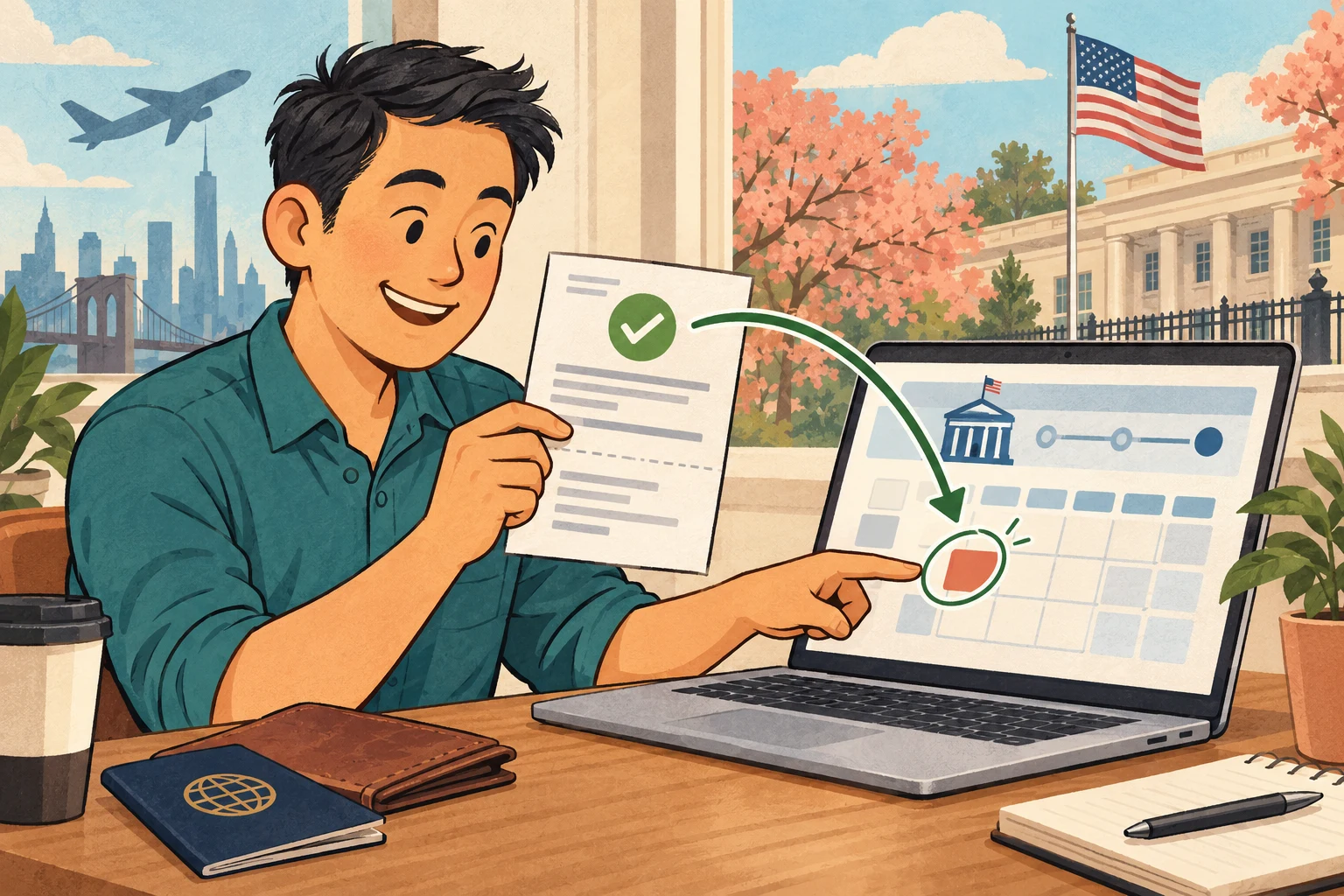
- 1. After receiving the payment confirmation, use the number provided in it to access the interview booking and open the appointment calendar.
- 2. Select an available Kuala Lumpur slot that you can attend.
- 3. Complete the booking all the way to the confirmation page.
- 4. Download and print the appointment confirmation.
- 5. Check each applicant’s name, passport number, DS-160 number, appointment location, date and time.
- 6. Read the arrival, security, delivery and rescheduling instructions.
A completed DS-160 and a paid fee are not themselves an appointment. Make sure a booking confirmation exists. If applying as a family, verify which members are actually included.
For a first application, plan to attend in person, including for children unless current instructions grant an exception. The published interview-waiver policy also allows certain B renewals within 12 months of expiry, with additional conditions including full prior validity and issuance at age 18 or older. Eligibility is not automatic, and an officer can still require an interview. 14
11. Documents to prepare for the interview
| Folder section | Documents to organize |
|---|---|
| Appointment essentials | Current passport, printed DS-160 confirmation, appointment confirmation, fee receipt if required and photo if required by the upload result or local instructions. |
| Identification | MyKad and any additional identification specified in the appointment/security instructions. |
| Previous travel | Old passports and relevant previous US visa or immigration records. |
| Work or business | For example, a current employment letter and recent payslips; or business registration and records explaining business income. |
| Funding | For example, recent bank statements showing an understandable funding pattern. If sponsored, evidence relevant to the actual payer and arrangement. |
| Trip outline | Proposed dates, route, accommodation and a realistic budget. Identify tentative plans honestly. |
| Personal circumstances | Student, retirement, family or other records relevant to explaining your situation, plus anything specifically requested. |
For preparation, I would take recent financial records covering a few months if available. That is a practical suggestion, not an official universal three- or six-month rule. There is no “magic balance” in this guide.
Keep papers in a simple folder and make requested items easy to find. The officer may not ask to inspect every supporting document. Your answers still need to be accurate and consistent.
12. My hotel recommendation: Element Kuala Lumpur
If you are coming from outside KL for the interview, I recommend staying at Element Kuala Lumpur the night before. It is in Ilham Tower at 8 Jalan Binjai and is part of Marriott Bonvoy. 15 Allow roughly five minutes on foot to the embassy, depending on your pace and the route to the visitor entrance.
Being nearby makes the morning easier. You can get your documents ready at the hotel, leave your luggage and all electronic items there, and walk over for the appointment. Check the route the evening before and leave enough time for the arrival instructions in your booking.
The embassy address is 376 Jalan Tun Razak, 50400 Kuala Lumpur. 18 Check breakfast hours against your appointment, and arrange luggage storage if you will have checked out before the interview.
13. Interview day, from leaving the hotel to walking out
Before leaving
Eat if time permits, check your documents and wear ordinary neat clothing. Bring only your essential application documents and identification in a simple folder. Do not bring electronic items: leave your phone, smartwatch, laptop, tablet, power bank, earbuds and other electronics at the hotel or with someone outside. Leave luggage behind too.
Print your appointment details and plan your journey back before leaving your phone behind. If you need accessibility arrangements or an accompanying person, check the arrangements with the appointment service beforehand.
At the entrance: your appointment time is for the gate
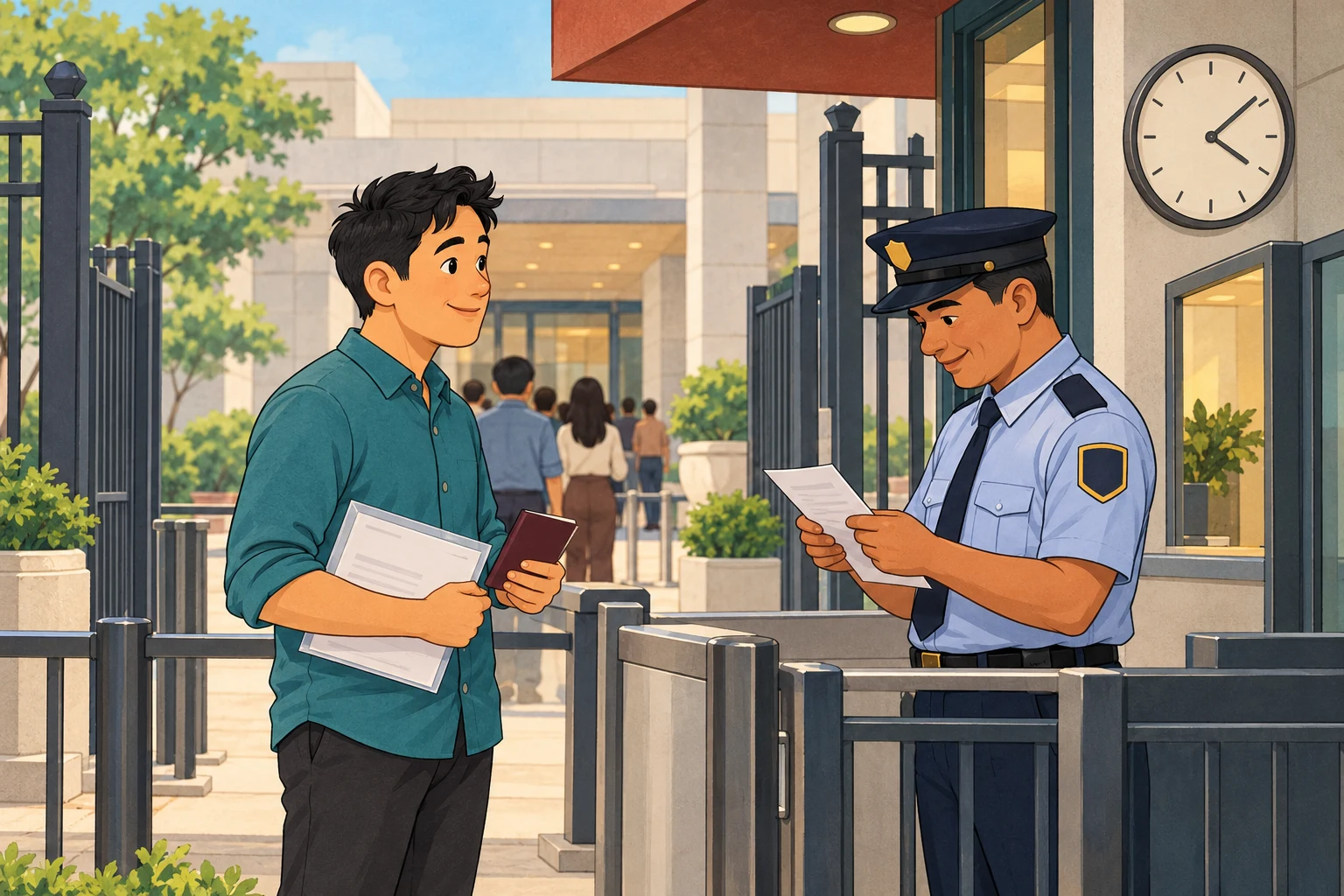
- 1. Report at the embassy gate for the appointment time shown in your confirmation and follow any specific arrival instructions.
- 2. Join the appropriate applicant queue and have your passport and appointment confirmation ready.
- 3. Follow the guard’s identity and appointment checks.
- 4. Complete the security screening and follow any instructions about permitted belongings.
- 5. Proceed to the consular waiting area as directed.
Document check and fingerprints
Staff will direct the local sequence, which may include checking the passport and DS-160 and taking digital fingerprints. Follow the instructions for placing your fingers on the scanner; mention an injury if it affects the scan. Wait for your next call. Counter numbers and queue order can change, so use the staff’s directions on the day.
The interview
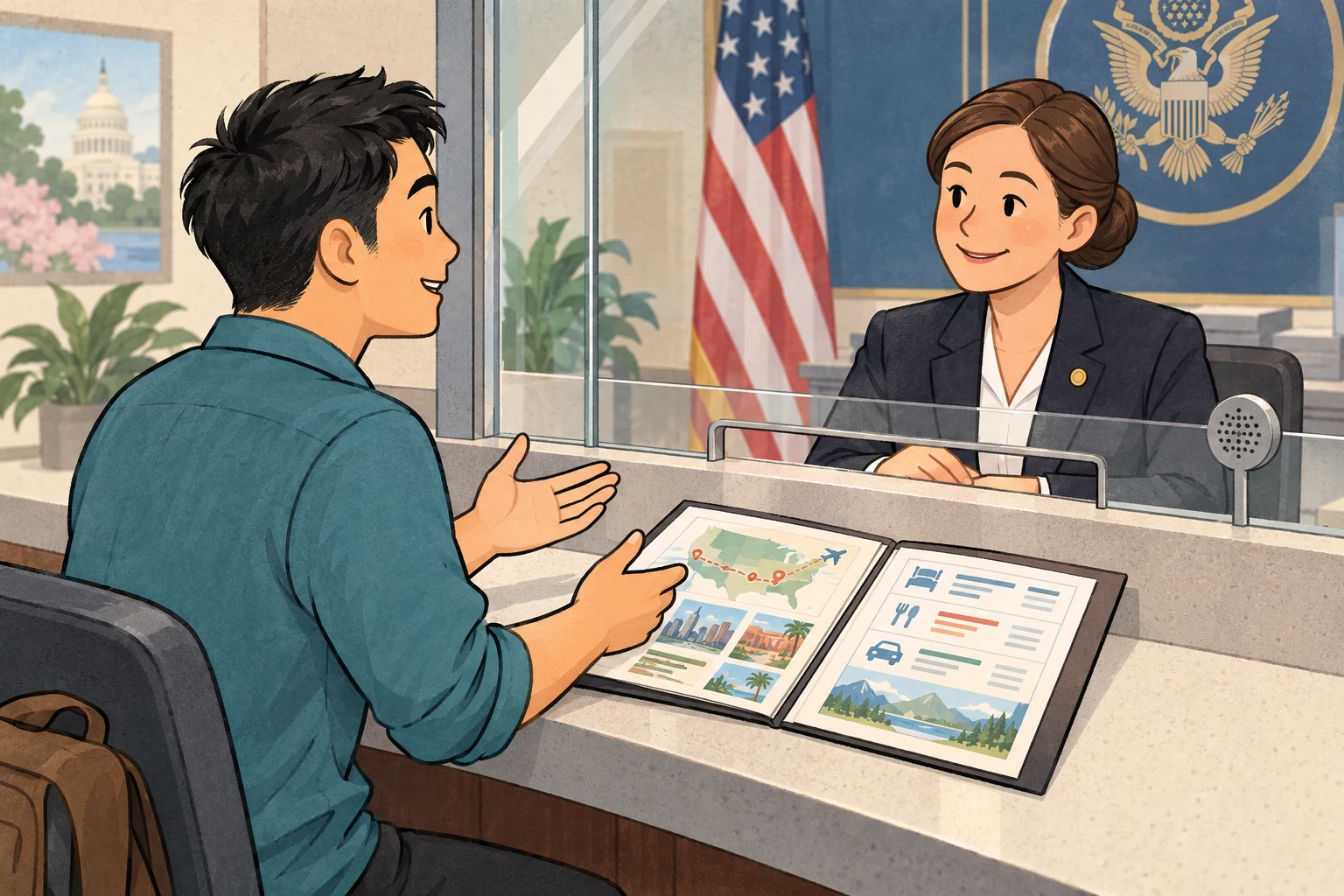
If your English is limited, do not let that put you off. Ask for translator assistance if you need it, and check the language-support arrangements with the appointment service before your visit. You do not need to memorize polished English answers.
What matters is answering honestly and confidently, and understanding your own trip. Know why you are going, which places you plan to visit, how long you will stay, your budget and how you will pay for it. Confidence comes from knowing your actual plans, not from rehearsing a story.
When called, approach the indicated counter, listen to each question and answer directly. Ask for clarification or for the question to be repeated if needed. Do not guess what the officer wants to hear or invent details to fill a gap.
Here is how those answers could sound for an employed traveler taking a self-funded, two-week vacation with a friend. The dates, budget and circumstances below are illustrative; use your own facts.
| Possible question | Example answer |
|---|---|
| Why are you going to the US? | “I’m going on vacation. I plan to visit Los Angeles and San Diego for sightseeing.” |
| Where will you go, and for how long? | “I plan to spend eight nights in Los Angeles and five nights in San Diego, from June 5 to June 18, 2027.” |
| What do you do in Malaysia? | “I’m a production supervisor at a manufacturing company in Penang. I’ve worked there for three years, and I’ll return to work after my vacation.” |
| Who is paying? | “I’m paying for my own trip from my salary savings. My budget is RM18,000, including flights, accommodation, transportation, meals and sightseeing.” |
| Who are you traveling with? | “I’m traveling with a friend. We’ll share a hotel room and rental car, and each of us will pay our own share.” |
| Do you know anyone in the US? | “No, I don’t personally know anyone there. We plan to stay in hotels throughout the trip.” |
| When will you return? | “I plan to leave the US on June 18 and return to Malaysia. I’ll be back at work on June 21.” |
| How much have you budgeted? | “RM18,000 for my share: RM5,000 for flights, RM5,000 for accommodation, RM2,000 for transportation, RM3,000 for meals and sightseeing, and RM3,000 as a buffer.” |
These examples show the level of detail needed to explain a trip clearly. RM18,000 is an illustrative personal budget, not a required minimum or a current price quotation. If you have relatives in the US, someone else is paying, or your employment circumstances differ, answer with those facts. Do not copy a statement that is untrue for you.
Before leaving the counter
Listen for the outcome and any action required. If given a letter, read it. If documents are requested, clarify the submission route. If your passport is retained, understand that you will need to wait for its return. Keep any collection instructions and then follow the exit directions.
14. After the interview: approval, 221(g) or 214(b)
| Outcome | Next step |
|---|---|
| Officer indicates approval | Wait for final issuance and passport return. An approval indication is not the same as having the printed visa in hand. |
| 221(g): documents or administrative processing | Read the notice and supply exactly what is requested. A case may display “Refused” during processing and later be reconsidered. Timing depends on the case. 11 |
| 214(b) refusal | Review the stated basis. There is no appeal for that application. A fresh application requires a new form, fee and appointment; consider whether circumstances or relevant information have materially changed. 10 |
Use the official CEAC visa status checker for case status and the appointment service for passport delivery or collection updates. A visa case status and a courier status answer different questions. There is no guaranteed number of working days covering every applicant. 11
If additional documents are requested, save what you submit and the submission reference. If a passport is needed for another journey while a case is pending, ask official support about the procedure before making assumptions.
15. Collect the passport and check the visa

- 1. Wait for the collection or dispatch notification from the official service.
- 2. Follow the identification requirements; if a representative will collect, check the authorization rules first.
- 3. Check the name, passport number, visa category, entries, issue date and expiry date.
- 4. Read any annotation and report errors through official channels promptly.
- 5. Keep a secure copy separately from the passport.
If your passport expires before a still-valid visa, the State Department says you may travel with the valid visa in the old passport and a new valid passport, subject to the relevant conditions. Do not peel the visa out or move it yourself. 2
16. Your first trip with the visa
Carry a clear itinerary, accommodation details, evidence of onward or return plans and access to trip funds. Answer border questions about the visit you are actually making. After admission, check your I-94 record and the permitted departure date. The visa’s expiry date and that deadline do different jobs. 1217
For me, the visa interview is an initial step worth getting through. Once your visa is issued, you can focus on planning your US vacation and the trips you want to make in the years ahead.
Official sources and useful links
Sources checked October 15, 2026. Live portal instructions take precedence for payment, appointment and security arrangements.
- 1. Malaysia visa validity and reciprocity
- 2. Visitor visa: eligibility and application overview
- 3. CEAC: start or retrieve DS-160
- 4. DS-160: official help and frequently asked questions
- 5. Visa application fees
- 6. U.S. Embassy Kuala Lumpur: visa services
- 7. U.S. Travel Docs: select Malaysia
- 8. Visa photo requirements
- 9. Digital photo specifications
- 10. Visa refusals: 214(b) and 221(g)
- 11. Administrative processing
- 12. Visa validity versus permitted stay
- 13. Global visa interview wait times
- 14. Interview waiver policy, September 18, 2025
- 15. Element Kuala Lumpur: official hotel information
- 16. Visa Waiver Program and participating nationalities
- 17. CBP: official I-94 portal
- 18. Embassy address: official Malaysia country information
The conversation
Questions, tips & experiences.
Have a question about this guide, or a useful travel tip? Every comment is reviewed before it appears.
1 comment
I am from Myanmar bangsa Rohingya Seorang pelarian saya nak pergi dubai seni tak boleh sang sangat susah boleh tak tolong