
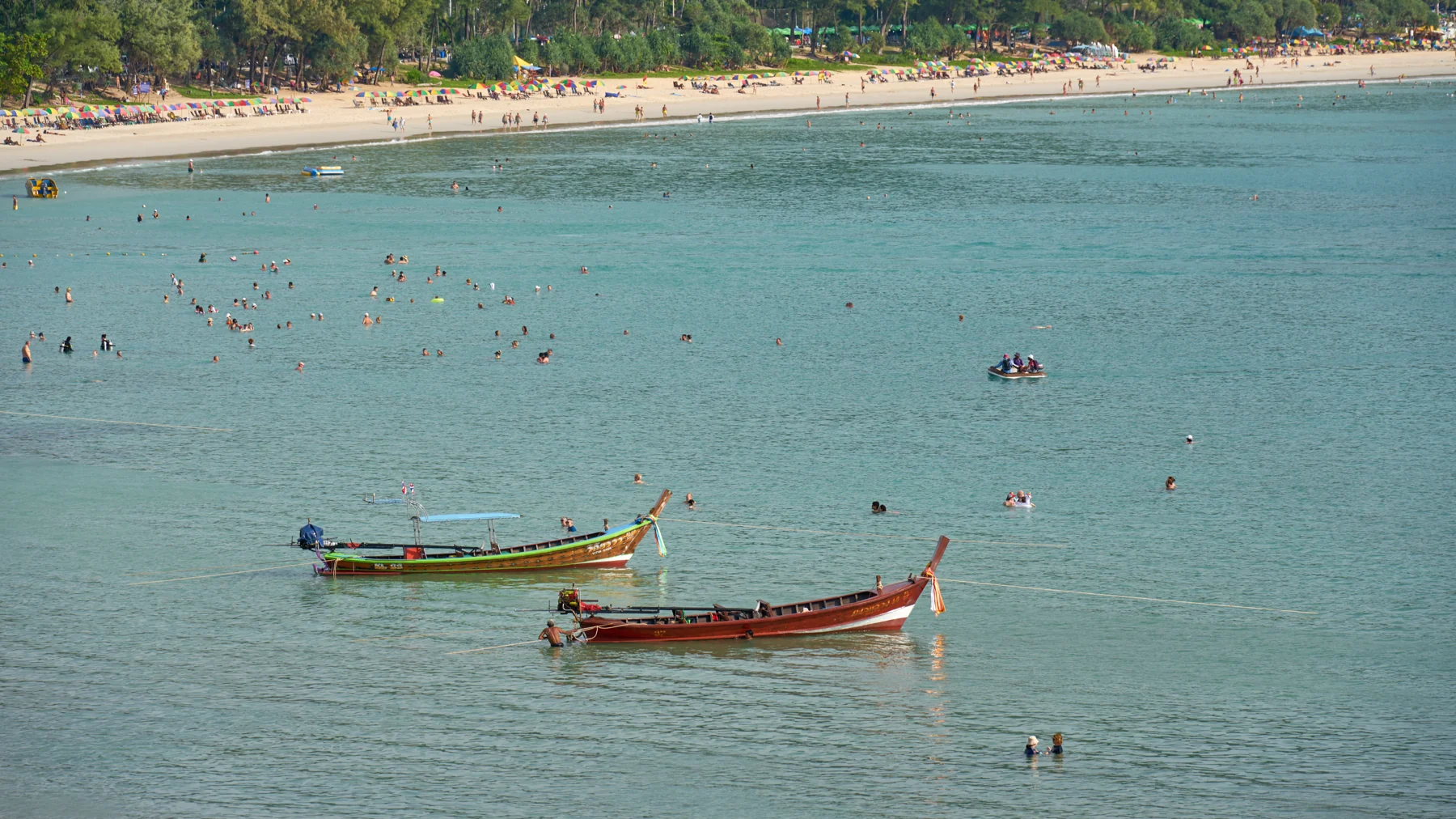
Phuket is an island where your hotel address decides much of the holiday. A resort near the airport, a room beside Patong and a stay near Kata may all appear in the same search results, but they support different days. For three nights, choose one base and one substantial outing. Otherwise, you can spend your beach holiday arranging cars across the island.
Four days in Phuket at a glance
| Day | Morning | Afternoon | Evening |
|---|---|---|---|
| 1 · Arrival | Fly to Phuket and transfer to your chosen coast | Check in, unpack and find your beach access | Dinner close to the hotel |
| 2 · Coast and resort | Beach walk and a swim when conditions allow | Lunch, pool time and a proper break | Sunset on the west coast |
| 3 · Old Town | A relaxed breakfast or an early town start | Shophouse walk, local food and a café stop | Sunday walking street, or return for dinner |
| 4 · Departure | Breakfast, packing and checkout | Prebooked airport transfer and your flight | Home, with no last-minute island detour |
This is a suggested rhythm for a couple travelling from Malaysia, with one base for all three nights. Arrival and departure days are deliberately light. If an island-hopping trip is the main reason you are coming, give it day two and accept that you will have less time to enjoy the resort. For a late flight home, agree on luggage storage and use of the pool with the hotel; a late checkout is helpful when confirmed, but it should not be the only thing making your final day work.
Phuket is one hour behind Malaysia. Keep that difference in mind when arranging a driver or reading a flight confirmation: local departure and arrival times are shown for their respective airports. A short flight can still occupy much of a day once you include reaching the airport, immigration, baggage and the onward drive.
Choose the coast that matches your plans
Nai Yang: an arrival-friendly resort break. Stay here if the hotel, swimming pool and nearby beach are the main event. It is on the northwestern side near the airport. A trip to Old Town needs its own transport plan; do not book here expecting to walk out into Patong nightlife. A quiet resort brief works best when you are content to spend a complete day close to the property.
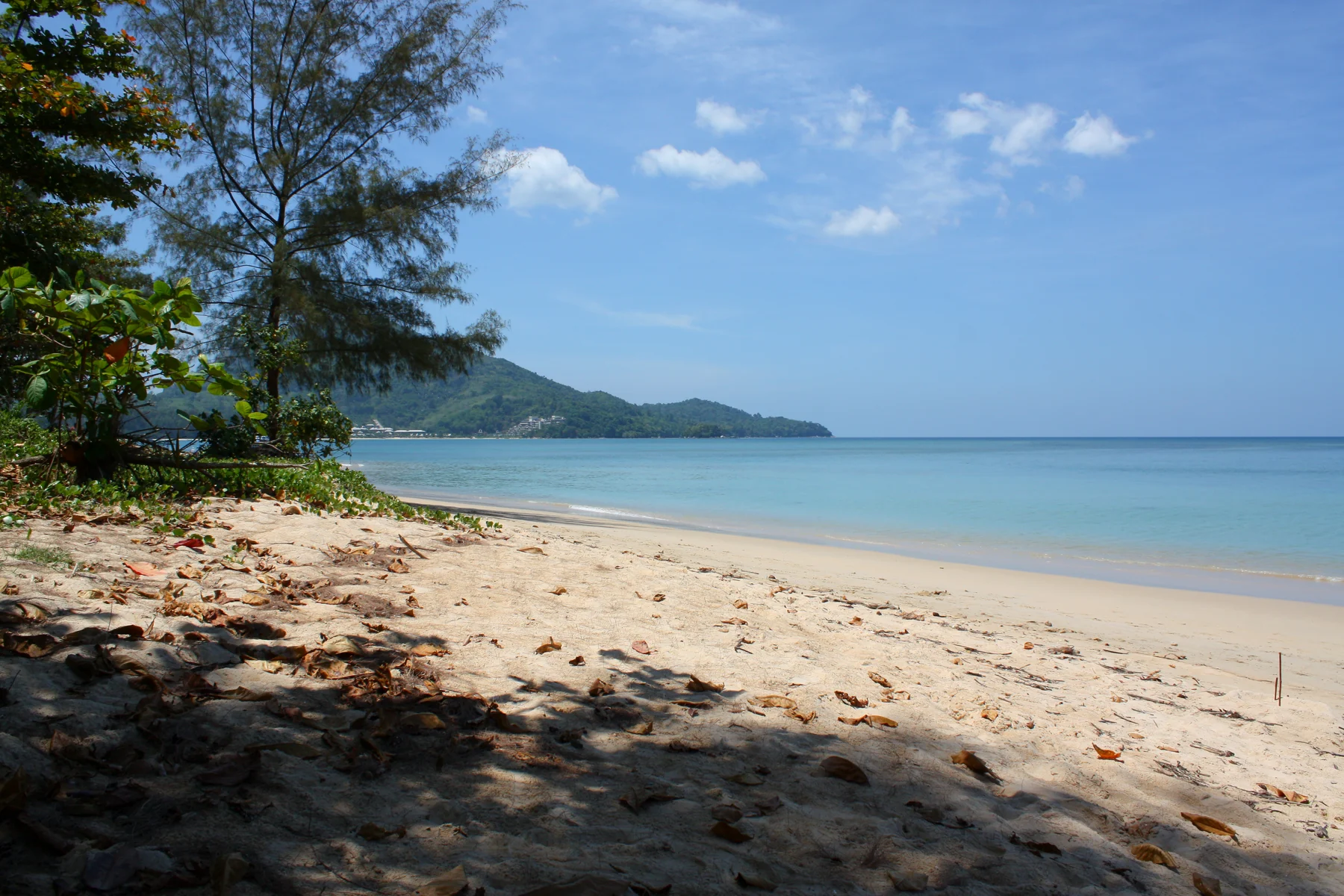
Kata: beach time with a more active neighbourhood plan. Choose Kata if you want to alternate the hotel with meals and time around the beach. Inspect the actual hotel approach: a property described as walking distance from the beach can still involve a hill. Kata is farther along the west-coast airport bus route, so budget time for intermediate stops.
Bang Tao and Layan: resort time with deliberate outings. These addresses suit a stay built around a particular hotel, with restaurants and excursions planned around its location. A Bang Tao hotel is not automatically beachfront. Compare its beach access, shuttle arrangements and exact entrance before treating two prices as equivalent.
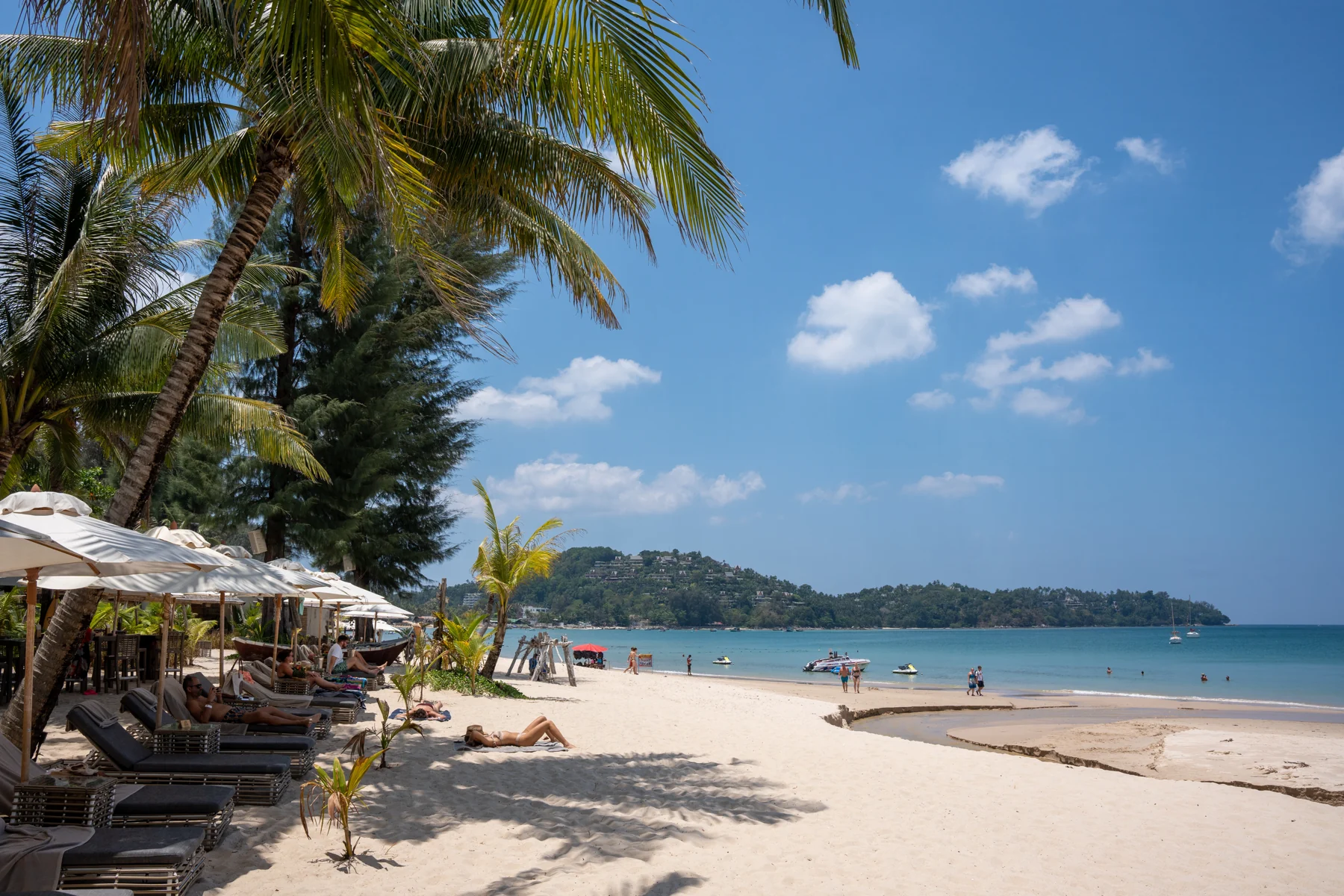
Patong: easier access to a busy resort town. It is a reasonable choice when shops, restaurants and nightlife matter more than seclusion. Ask where your room faces and how far the hotel is from the parts of Patong you want to use. Staying at its northern end does not make every evening venue a short stroll.
| Base | Best reason to stay | Trade-off to plan around |
|---|---|---|
| Nai Yang | A quiet resort break near the airport | Old Town and southern viewpoints need a deliberate outing |
| Kata / Karon | Beach days with restaurants and a more active neighbourhood | Airport journeys are longer; some hotel approaches are steep |
| Bang Tao / Layan | Resort facilities, villas and a northern west-coast stay | A Bang Tao address does not mean direct beach access |
| Kamala | A west-coast base and a Hyatt resort option | Hillside hotels may require internal transport and a separate beach trip |
| Patong | Restaurants, shops and nightlife nearby | Room location, traffic and evening noise matter |
| Phuket Old Town | Architecture, cafés and local food on foot | The swimming beach is a separate journey |
For a first visit, begin with your evenings. If you want to walk out for dinner most nights, look closely at Kata or Patong and map the route from the lobby, rather than from the resort’s approximate pin. If you want to settle into a pool chair and barely leave the property, Nai Yang or Layan can be a better use of your budget. Old Town makes sense for a food-focused stay, but it is a different trip from waking up beside the sea.
Avoid splitting a three-night visit across two hotels unless both stays are important in their own right. Checkout, luggage storage and a second check-in can consume the best part of an afternoon. One hotel with the right room, breakfast and location often gives you more holiday than two properties chosen to collect loyalty nights.
Luxury hotels with loyalty value
Marriott Bonvoy — Phuket Marriott Resort and Spa, Nai Yang Beach. Our shortlist choice for the Nai Yang version of this trip. You are choosing a beach resort on the airport side of the island, so use it for arrival, departure and a full hotel day. Compare cash and points for the exact dates, and price breakfast for two if your booking does not include it.
The official Marriott page lists a beachfront location, lagoon and main pools, Quan Spa, and several dining venues, including Andaman Kitchen and Big Fish. It also lists the airport roughly 4.6 kilometres away. That combination suits an arrival-friendly stay built around the property. A private transfer can be arranged, but the website distinguishes it from a complimentary airport shuttle; confirm the current quote directly. Decide whether a regular room, suite or pool villa is worth its own price, without making an upgrade the reason the booking works.
We may earn a commission when you book through the Trip.com hotel links in this article.
World of Hyatt — Hyatt Regency Phuket Resort. A Kamala-area alternative for readers concentrating on Hyatt. Its terraced hillside setting means room position and internal movement deserve attention. Ask about the route from your room to the pool, lobby and beach transport; a sea view does not itself tell you how easy a swim will be.
With a hillside resort, the daily route matters as much as the photograph from the balcony. Ask the hotel where the booked room category sits, whether you can comfortably walk between it and breakfast, and how the main swimming beach is reached. If one of you has limited mobility, get a specific answer about the room and route rather than a general reassurance that the property has transport.
GHA DISCOVERY — Anantara Layan Phuket Resort. A luxury option for a Layan resort stay. Compare the entry room and pool-villa categories separately; photographs of the most expensive villa are not a description of every booking. This participates in DISCOVERY: check eligible rates and D$ use, rather than looking for a Marriott-style points-night price.
Anantara’s official accommodation pages separate hillside rooms and suites from pool villas and residences. Choose the layout you will actually use: a couple may value a private pool and shaded outdoor space more than a very large residence. Check the meal package and spa reservations alongside the room rate. For a short stay, one well-chosen hotel dinner can be more enjoyable than arranging a cross-island car simply to eat elsewhere.
Mid-tier options to compare on the same dates
Hilton Honors — Mamaka Phuket, Tapestry Collection by Hilton. The former Hilton Garden Inn Phuket Bang Tao link now redirects to this property on Hilton’s official site. It is a Bang Tao option to compare against a beachfront resort, with a rooftop pool and restaurants. Hilton lists Bang Tao Beach about 1.2 kilometres away: include beach transport or the walking route in your decision, rather than treating it as a hotel on the sand. Rates still depend on your dates and room category.
Marriott Bonvoy — Four Points by Sheraton Phuket Patong Beach Resort. Compare this for a Patong stay where access to the surrounding town matters. It is a different holiday from secluded Nai Yang. Check the room category, road crossing to the beach and breakfast package; the Four Points brand does not guarantee a low rate during peak dates.
ALL Accor — Novotel Phuket Kata Avista Resort & Spa. A Kata-area option with resort facilities and ALL participation. Look carefully at the approach to the property and ask about available beach transport if walking gradients matter. Compare the final two-person rate with breakfast and cancellation terms against the others, not just the first price displayed.
Use the official room and location pages when comparing Four Points in Patong and Novotel Phuket Kata Avista. The useful comparison is the complete stay: how much walking is involved, where you will eat, whether breakfast is included, and how easily you can get back after dinner. “Mid-tier” here describes the role in the shortlist, rather than a promise that a resort will be cheap at New Year or on a school holiday.
For all six, book an eligible rate through the programme's approved channels and add the membership number. Do not budget on an unconfirmed upgrade or late checkout. Our points guide explains why the five programmes cannot be compared using the same points valuation.
Compare points against the stay you would really book
Make two totals for the same room category and dates. The first is the eligible cash rate after taxes and the breakfast you need. The second is the award booking’s points plus any cash charges and meals. Then compare the cancellation deadlines. If paying cash, record how many points the stay earns; if redeeming, count only the cash costs it actually replaces. A villa photograph, possible elite upgrade or unrelated lounge benefit is not a saving on the room you are buying.
For example, an illustrative three-night room total of THB12,000 and an award requiring 90,000 points imply about THB0.133 of room value per point before differences in inclusions. This is arithmetic to help compare your own quotes, not a current Phuket award price or a recommended redemption threshold. Marriott, Hyatt, Hilton, GHA DISCOVERY and ALL all work differently, so do the calculation in the programme you will use.
Flying from Malaysia: Economy or Business?
From Kuala Lumpur, start by searching Malaysia Airlines KUL–HKT nonstop, with Economy and Business for your dates. It is a oneworld member. Confirm the operating carrier and actual service in the flight schedule. For a short beach break, removing a connection can be worth more than earning additional miles.
For Star Alliance, Singapore Airlines offers KUL–SIN–HKT with Economy and Business options. Its Star Alliance participation may fit your existing loyalty account. Choose the connection when its fare, departure time or redemption works for you; count the Singapore transit in the journey, not just airborne time.
Also price Penang, Kuching and Kota Kinabalu
Your SIA search should start from the airport you can realistically use. SIA's Malaysia departure guide includes Penang, Kuching and Kota Kinabalu. Compare these complete return itineraries for the same dates and two adults; a KUL-origin result does not establish the fare from another Malaysian city.
| Departure | Search via Singapore | What to check before choosing the cabin |
|---|---|---|
| Kuala Lumpur, KUL | KUL–SIN–HKT | Select SQ-operated flights if you want full service on both sectors |
| Penang, PEN | PEN–SIN–HKT | PEN–SIN is offered by SQ and Scoot; choose the operating carrier, not just an SQ flight number |
| Kuching, KCH | KCH–SIN–HKT | The SIN feeder is Scoot; inspect its cabin separately from the onward SQ flight |
| Kota Kinabalu, BKI | BKI–SIN–HKT | The SIN feeder is Scoot; a Business search can include a different cabin on this sector |
Treat these as routes to search, subject to a saleable connection on your dates. For Penang, compare PEN–SIN–HKT directly with PEN–KUL–HKT on Malaysia Airlines, rather than assuming you first need a separate ticket to KUL. For Kuching and Kota Kinabalu, compare the SIN option against Malaysia Airlines via KUL when full service and an available Business cabin throughout are priorities. Check every sector and both directions.
A Penang-origin fare can price differently from Kuala Lumpur. Keep the comparison fair: same dates, cabin on each sector, baggage, change rules and total for two. If you live near KL, include the extra cost and time to reach PEN; a lower ticket price alone may not save money. Do not skip the first flight of a cheaper itinerary—book the origin you will actually depart from.
SIA–Scoot codeshare guidance explains the services attached to qualifying through bookings, including the applicable checked baggage and meal or snack. A separately purchased Scoot ticket is a different product. Confirm that the itinerary is sold as one through journey, ask about baggage through-check and disruption handling, and read the Scoot operating label. Scoot is a low-cost operator; an SQ code does not turn its cabin into Singapore Airlines Business or make every Star Alliance benefit apply.
Economy comparison: enter two passengers, add checked baggage and seat-selection needs, and inspect change and refund terms. A full-service airline can still sell different fare bundles. Check the booking class against your chosen frequent-flyer programme before assuming mileage credit.
Business comparison: inspect both sectors on a connecting booking, the aircraft and the seat map. A cabin label is not a guarantee of the same seat on every flight. For this short route, ask whether the added comfort and confirmed ground benefits justify the total fare difference for two. If the Business ticket already supplies your lounge, avoid valuing the same credit-card lounge benefit twice.
Airport to hotel: the bus and the car solve different problems
The Phuket Smart Bus airport route runs down the west coast through Patong, Karon and Kata toward Rawai. The published fare is THB100 per person. Use its current timetable and stop map to match your hotel; this route is not a direct airport-to-Old-Town service.
Under its payment instructions, you can use exact cash or supported contactless Visa, Mastercard and JCB cards. Find the official airport bus pickup using current airport signs or the information desk, and check the final operating departure against your arrival. Walking from a main-road stop with luggage is part of the journey, especially for a hillside hotel.
For two adults, a usable bus in both directions totals THB400, before any rides between the stop and hotel. A private transfer may still make sense for a late arrival, heavy luggage or a resort off the route. Obtain a written all-in quote naming the property, vehicle, flight tracking, waiting allowance and any late surcharge. Ask for the return pickup plan at the same time.
For Old Town, a prearranged return transfer is straightforward from a resort. Ask whether the quote is two separate trips or a car waiting during the visit. Keep the pickup pin and driver's contact. Do not assume a cheap ride outward guarantees the same price or waiting time on the return.
Choose the bus for the hotel route, not just the fare
The airport–Rawai service is a west-coast route. It can work well when your accommodation is close to a listed stop and you are comfortable with intermediate stops, but it should not be treated as a direct transfer to every resort. A short ride from the bus stop, a steep approach or two sets of luggage can change the calculation. Match the stop on the operator’s current timetable with the hotel entrance and keep a workable backup for a late arrival.
For a town outing from Patong, the operator also publishes a separate Bus Terminal–Patong service at THB50 and a free Dragon Line in Phuket Town. These are different services from the THB100 airport route. Check the correct direction, operating times and your final walk before using them for an evening market visit. An affordable outward journey is useful only if the return still runs when you want to leave.
Day one: arrive and settle into the right part of the island
Travel to the hotel, check in and keep dinner nearby. If the room is not ready, ask what facilities and bag storage are available. Do not prepay an excursion for the same afternoon based solely on the aircraft's scheduled arrival.
Walk the practical route to your beach access or nearest restaurants while it is light. This small task resolves tomorrow's questions: where to cross, where the bus stops, how steep the hotel approach is and whether you need transport back after dinner.
A good first evening is deliberately simple: a local meal, a short walk and an early night if the journey has been tiring. In a resort area, ask reception for a nearby dinner option you can reach on foot and for the safest route back. If you arrive after dark, leave the unfamiliar beach path until morning. That first night is for settling in, rather than proving how much of Phuket you can cover.
Day two: one beach, one hotel, no cross-island deadline
Use the morning for your chosen beach when conditions permit, then lunch and a hotel break. Follow swimming flags and current local advice. A booked room with a sea view is still enjoyable on a day when the sea is unsuitable for swimming; that is one reason to evaluate the pool and room properly.
If you want a spa treatment or hotel dinner, reserve it around this day. Book what is actually important to you. A separate island excursion would replace much of this day and needs its own operator, pier transfer and weather cancellation checks.
When to go, and how to keep a rainy day enjoyable
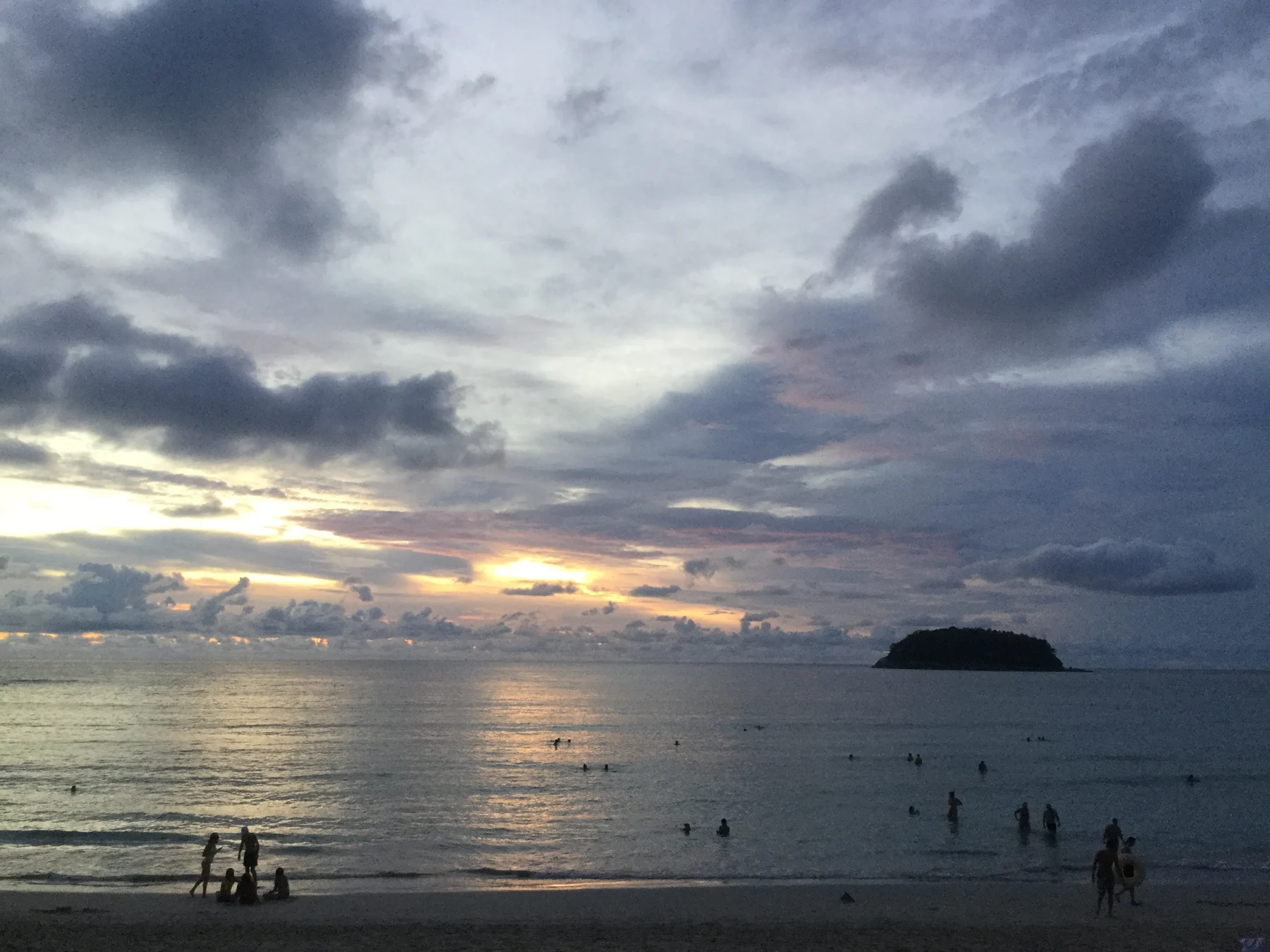
Phuket faces the Andaman Sea, and the Tourism Authority of Thailand identifies May to October as the southwest monsoon season. Rain does not necessarily occupy the whole day, but sea conditions can change the activities you can enjoy. A pool, comfortable room and nearby food options are especially valuable on a trip where swimming and boating are the main plans.
Use the day’s conditions to choose between the sea, pool and a town visit. A red swimming flag means moving the swim to somewhere permitted, not looking for an unguarded stretch farther along the beach. Keep a boat outing flexible enough to handle cancellation, and ask which pier your tour uses before arranging pickup. The transfer to the pier can take as much planning as the boat itself.
For rain, bring the useful indoor part of the trip forward: a café and lunch in Old Town, a booked massage, or an unhurried afternoon at the hotel. A heavy shower is a good reason to shorten a street walk, rather than add several distant stops to compensate. Keep a dry bag or simple waterproof pouch for your phone, documents and the return pickup details.
Day three: a specific Old Town walking route
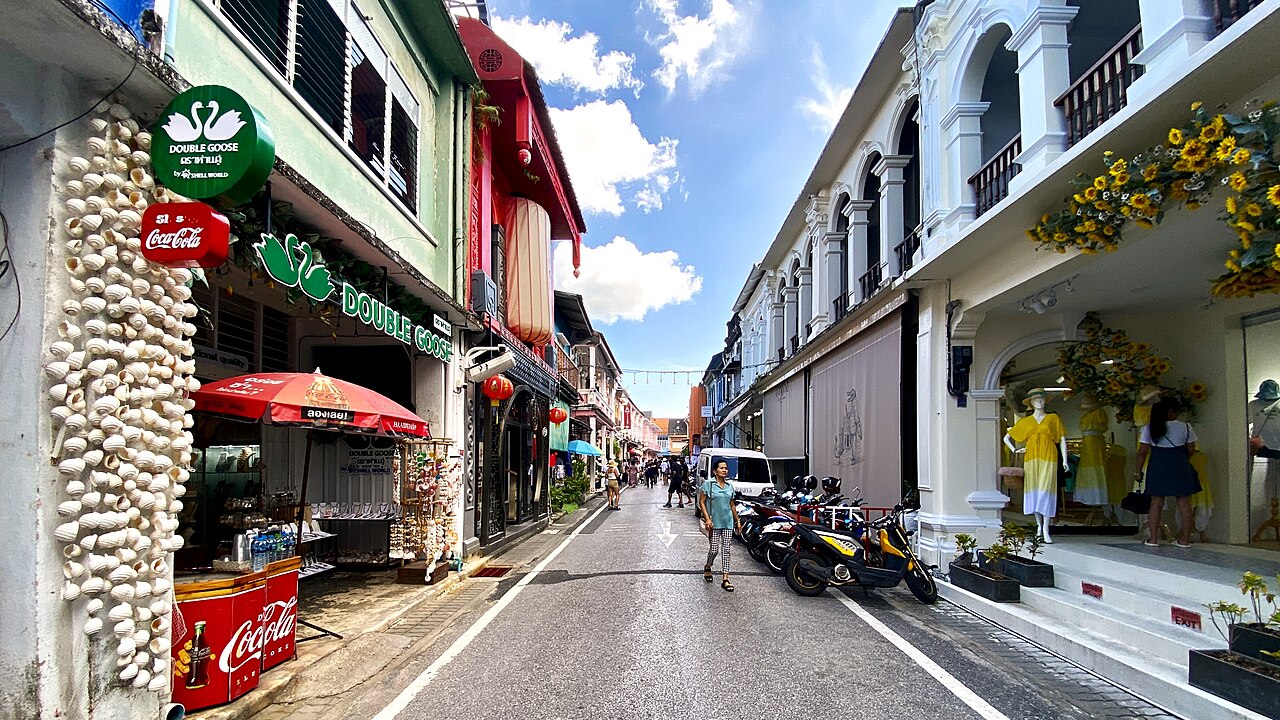
Plan a two- to three-hour walk, with additional time for a meal: Thalang Road → Soi Romanee → Dibuk Road → Phang Nga Road. This is our suggested sequence, not an official timed tour. Save all four street names and start with a drop-off that lets you continue on foot.
The Tourism Authority of Thailand's Old Town guide describes the Sino-European streetscape associated with Phuket's trading history. Look at the covered frontages, narrow shop-house plots and changing building details. Comparing adjacent streets makes the visit more interesting than taking a single photograph of colourful facades.
How to make the Old Town walk more interesting
Start on Thalang Road and look at the buildings above the shop signs: shutters, decorative plasterwork and the rhythm of the narrow frontages. Turn into Soi Romanee for its colourful façades, then use Dibuk Road and Phang Nga Road to see how the streets change. The TAT Old Town guide connects the architecture with the island’s trading and tin-mining history. Treat the walk as a small neighbourhood visit, with time to look inside open shops and stop for a drink.
For more context, choose one museum or historic house rather than trying to visit every stop. Phuket Thai Hua Museum on Krabi Road is a natural extension to the Old Town route; check its current opening hours before adding it to the plan. An early walk suits photographs and a late breakfast. An afternoon walk suits a meal and, on Sunday, the walking-street market. Both can work; the useful decision is how the timing fits your return journey.
If your day is a Sunday, the Thalang Road walking street is published as 16:00–22:00. Shift the visit later if the market is your priority, and choose a return pickup outside the busiest pedestrian stretch. Confirm that week's arrangements before travelling across the island.
Carry water and allow a sheltered break. If heavy rain makes the walk unpleasant, shorten the streets you cover and keep your meal or indoor stop. The point of this outing is understanding a different part of Phuket, not completing a checklist in bad weather.
What to eat in Phuket Old Town
Old Town is a good place to let the meal shape the afternoon. Phuket’s food reflects Chinese, Peranakan, Malay and southern Thai influences, and the Thai government’s Old Town guide highlights local dishes such as Hokkien noodles and o-tao. For a Malaysian traveller, some names may feel familiar, but the island’s versions are worth trying on their own terms.
| What to look for | What it adds to the day |
|---|---|
| Hokkien noodles | A substantial noodle meal between the shophouse streets |
| O-tao | A local oyster dish to try as part of an Old Town food stop |
| Local sweets and an iced drink | A small break while walking or browsing the market |
| Southern Thai dishes | A fuller lunch or dinner; ask about the heat level before ordering |
Choose a small number of things you actually want to eat. One noodle meal and a dessert stop leave room to enjoy the streets; booking a large lunch and then arriving at a market with no appetite makes the second stop less rewarding. For seafood, agree on the unit and total price before ordering, especially when it is priced by weight.
If halal food matters, choose a venue that can confirm it rather than assuming a seafood dish is automatically suitable. Ask about the kitchen, sauces and stock as well as the main ingredient. The same approach helps with allergies and vegetarian requests: describe what you need directly, and pick a place that understands the requirement.
A southern Phuket outing: Wat Chalong and Promthep Cape
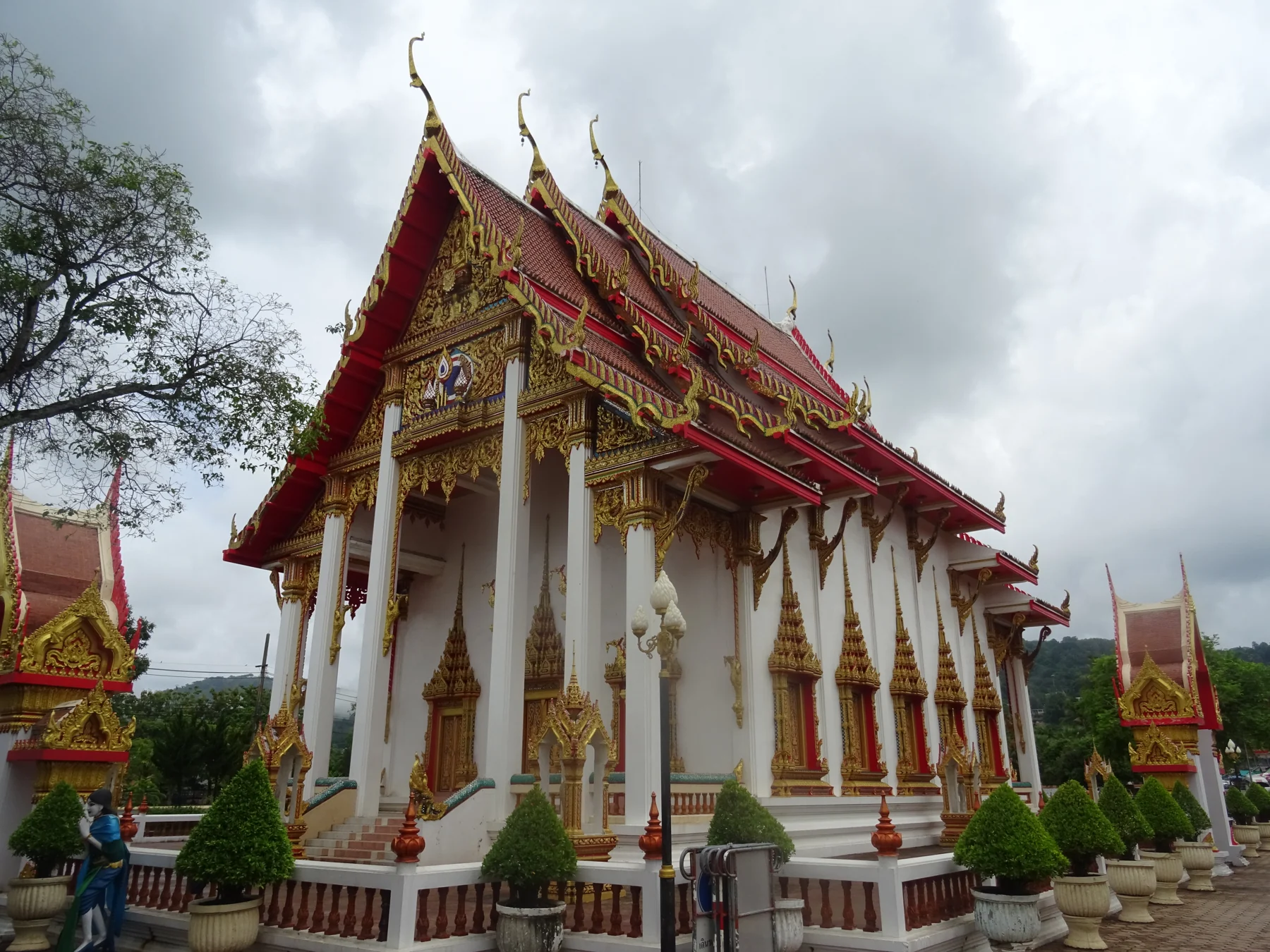
For a more active version of day three, consider Wat Chalong and Promthep Cape as a separate southern outing. TAT includes these in a Phuket sightseeing route. Start with the temple while you still have energy for walking, keep a meal break in the plan, and finish at the cape if the weather suits a coastal view. Adding both to an already full Old Town afternoon makes a much busier holiday.
At Wat Chalong, cover shoulders and knees, follow the signs for shoes and photography, and leave space for people who have come to worship. Ask your driver to agree on where you will meet afterwards. At Promthep, the main viewpoint can be enough: you do not need to descend a rocky path to make the visit worthwhile. Comfortable footwear and daylight for unfamiliar paths matter more than chasing a photograph at the edge.
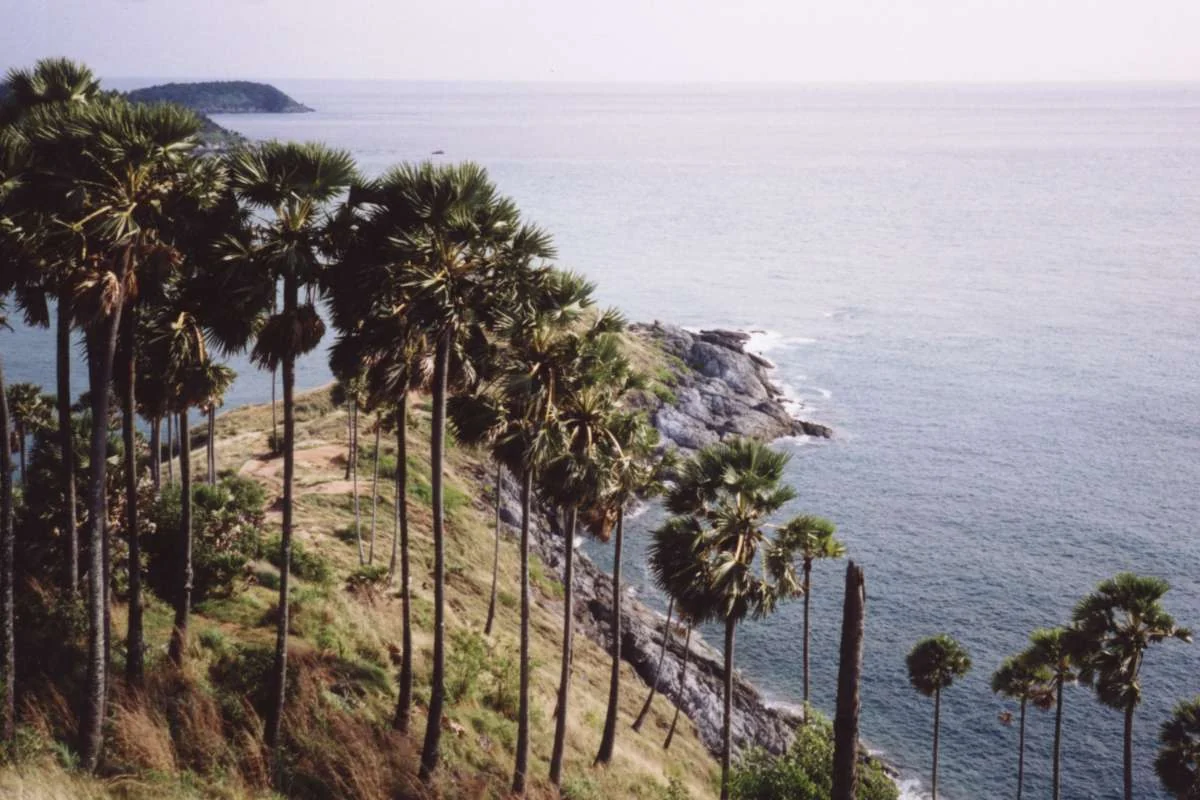
The southern outing fits most naturally when staying around Kata, Karon or Rawai. From Nai Yang or Layan, decide whether the longer day out is how you want to use one of just two full days. A sunset viewed from your own coast is a perfectly reasonable alternative. Choose the outing for the places you want to see, rather than because they appear on a standard driver itinerary.
If an island trip is your priority
Choose one full-day boat trip in place of the hotel day, and compare the actual itinerary rather than a long list of island names. Record the pier, boat type, pickup window, travel time on the water, group size, lunch arrangements and any park fees. Ask what happens if the operator cancels for weather and whether a cancelled swim stop changes the price or route. Keep the booking confirmation and the operator’s contact with your hotel details.
For a four-day stay, avoid placing the boat trip on your flight-home day. Boats, road traffic and baggage collection leave too many moving parts. If you decide to keep this visit entirely on Phuket, you can still have a satisfying trip: one well-chosen coast, an Old Town meal and enough time to enjoy the room you booked.
Day four: make the airport transfer the fixed appointment
Have breakfast, check the bill and depart with a transport buffer suited to your coast and current road conditions. Ask the hotel to recommend a pickup against your flight's check-in requirement. A remembered driving time from someone else's holiday is not enough for a departure plan.
Before paying, compare three-night room total + breakfast for two + airport return + Old Town transport. Use actual quotes. Read our Malaysian travel-card comparison for the overseas-spending cap, FX fees and lounge rules that affect this trip. Keep a modest cash reserve for small purchases; card rewards should follow the holiday, not dictate extra spending.
Build a budget for two before booking
Start with three nights in the actual room category, not the lowest teaser rate. Add breakfast for both of you, airport transfers in both directions, the Old Town outing and the meals that will be eaten at the hotel. Then add the optional item that matters most, such as a spa treatment or boat day. This makes it easier to compare a less expensive inland hotel with a beachfront resort that needs fewer paid journeys.
| Expense | What to enter |
|---|---|
| Flights | Return fare for two, baggage and any seat fees you need |
| Room | Three-night total after taxes for your chosen category |
| Breakfast | Only the cost not included in the rate or a confirmed benefit |
| Airport transport | Both journeys, including a last-mile ride if using the bus |
| Old Town / southern outing | Return car or bus costs and any planned stops |
| Food and optional activities | Your actual meal plan, spa or boat trip |
| Buffer | A separate allowance for changed transport or plans |
As a simple illustrative hotel comparison, a room saving of THB800 per night is THB2,400 over three nights. If reaching the beach and your preferred dinner spots adds THB700 a day on two full days, THB1,400 of that saving disappears. Neither number is a live Phuket quote; the example shows why the hotel’s position belongs in the budget. Use the transfer and room quotes for your own dates to decide whether the remaining saving is worth the extra journeys.
The small details that make the trip easier
- Save the hotel’s full name, entrance pin and phone number offline.
- Agree on flight tracking, waiting time and a meeting point for your airport pickup.
- Keep a small cash reserve alongside cards for modest purchases.
- Pack light clothing, sun protection, a rain layer and comfortable walking shoes.
- Check swimming flags and the operator’s cancellation terms for any boat outing.
- Keep the last evening close to your base and the departure-day transfer confirmed.
The best version of this short Phuket trip gives you enough room to notice where you are. Breakfast need not be rushed, a beach walk can take longer than expected, and Old Town deserves more than a stop for one photograph. Choose the base first, give one outing the attention it deserves, and leave the rest of the day open enough to enjoy it.
Photographs and source notes
Destination photographs show the named locations; they are not photographs of a claimed personal hotel stay. All new photographs have been resized and converted to WebP. Each retains the licence shown below. The existing Soi Romanee photograph is retained with its CC0 attribution.
- Kata Beach1.jpg — Radek Kucharski · CC BY 2.0
- Nai Yang Beach, Phuket (4448621322).jpg — Andy Mitchell · CC BY-SA 2.0
- Wat Chalong 2018.jpg — Christophe95 · CC BY-SA 4.0
- Phuket Promthep Cape.jpg — Ahoerstemeier · CC BY-SA 3.0
- Sunset in Kata.jpg — HutheMeow · CC BY-SA 4.0
- Bang Tao Beach (53667853591).jpg — Raita Futo · CC BY 2.0
Practical sources: Phuket Smart Bus routes and timetable · fares and payment · TAT Phuket Old Town · TAT marine tourism guidance. Hotel links in the article lead to official property pages. Transport, food and suggested timing should be checked again for your travel dates.




The conversation
Questions, tips & experiences.
Have a question about this guide, or a useful travel tip? Every comment is reviewed before it appears.
0 comments
Be the first to share a question or a helpful tip.